

As global crises such as poverty, inequality, high rates of youth unemployment, climate change, unbridled environmental degradation, food insecurity, and systemic inequality persist, the limitations of dominant development paradigms—rooted in exclusionary, Western epistemologies—have become increasingly evident.
These frameworks often marginalize Indigenous Knowledge Systems (IKS), despite their
potential to inform sustainable, locally grounded, and equitable alternatives.
Indigenous communities across the world possess complex knowledge systems that include epistemic
ways of being, knowing, and doing. Wise practices from Indigenous Knowledges that prioritize
environmental stewardship, care for community/ extended kinship networks, and planning for the next even generations can inform mainstream systemic change.
Further, much can be learned from Indigenous
experiences with the postcolonial state in terms of reconciliation, agency, recentering, and
ownership/intellectual property of Indigenous knowledges.
By neglecting the rich values, sophisticated wisdom, techniques, technologies and resources in Indigenous Knowledges, the world has continued to move within a system that reproduces domination, exclusion and marginalization. The limitations inherent in the discourses and practices of development call for paradigm shifts in epistemology, conceptualization, design, and implementation of programs and policies geared toward transformation of society.
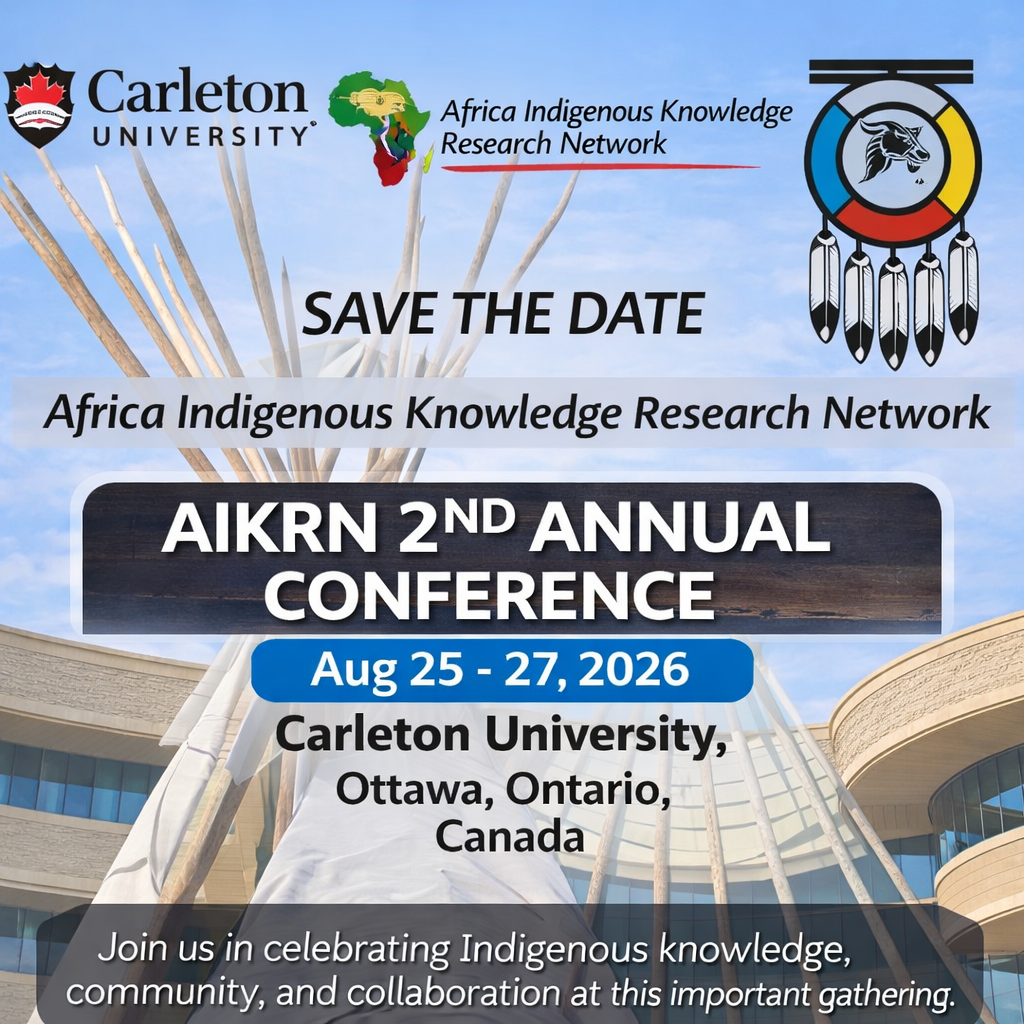
Paradigm shifts require intentionality in recentring the voices and knowledge resources of marginalized groups and Indigenous communities. This international academic conference seeks to center IKS and wise practices from Indigenous ways of being, knowing, and doing across Africa, Canada, and globally. Scholars, practitioners, entrepreneurs, youth leaders, policymakers, and Indigenous Knowledge holders are invited to explore how transformative wise practices in IKS can shape more resilient, inclusive, and sustainable livelihoods across diverse contexts.
With a comparative lens across communities and continents, the conference will center how Indigenous epistemologies, entrepreneurial practices, and innovations can inform new models of sustainable development, decolonized and Indigenized economies, and (w)holistic well-being.
The conference will feature academic papers, practice-based insights, case studies, and community-led presentations. Interdisciplinary approaches and collaborative works between scholars and Indigenous communities are strongly encouraged. There will be an Indigenous Makers Market where local Indigenous artisans will display their products for purchase.
The conference will focus on the following themes:
• Indigenous Knowledge Systems and Comparative Epistemologies
• Indigenous Wise Practices: Comparative Perspectives
• Indigenous Economies and Transformation in Postcolonial Societies
• Entrepreneurship and Livelihood Strategies in Indigenous Communities
• Climate Change Adaptation and Environmental Stewardship
• Postcolonialism and Indigenous Knowledge Systems
• Youth and Indigenous Entrepreneurship
• The Epistemological Bases of Indigenous Entrepreneurship
• Women, Youth, and Intergenerational Knowledge Transmission
• Decolonizing Development and the Role of Traditional Institutions
• Indigeneity and Neo-Capitalist Economic Practices
• Wise Practices in Health, Food Systems, and Cultural Heritage
• Indigenous Knowledges, Policy, Governance, and Rights-Based Approaches
• Innovation and Indigenous Technologies
• Diaspora, Identity, and Transnational Indigenous Knowledge Exchange
Conference Format: This will be a hybrid conference (physical + virtual participation), ensuring inclusive access for Indigenous communities and international participants..
For in-person participants, please kindly contact the hotel for accommodation:
- Courtyard Marriot hotel, Ottawa
- Delta hotels Ottawa city centre
- Best Western plus, Ottawa
- Holiday Inn, Ottawa Downtown
Languages: English (simultaneous translation may be available for key sessions)
Publication Opportunities:
Selected papers will be considered for publication in a peer-reviewed edited volume and special journal issues in RUTA: The Journal of African Indigenous Knowledge and Research.
Contact and Inquiries: To donate sponsorship for this event please email: AIKRN2026@africaindigenousresearch.com