Introduction:
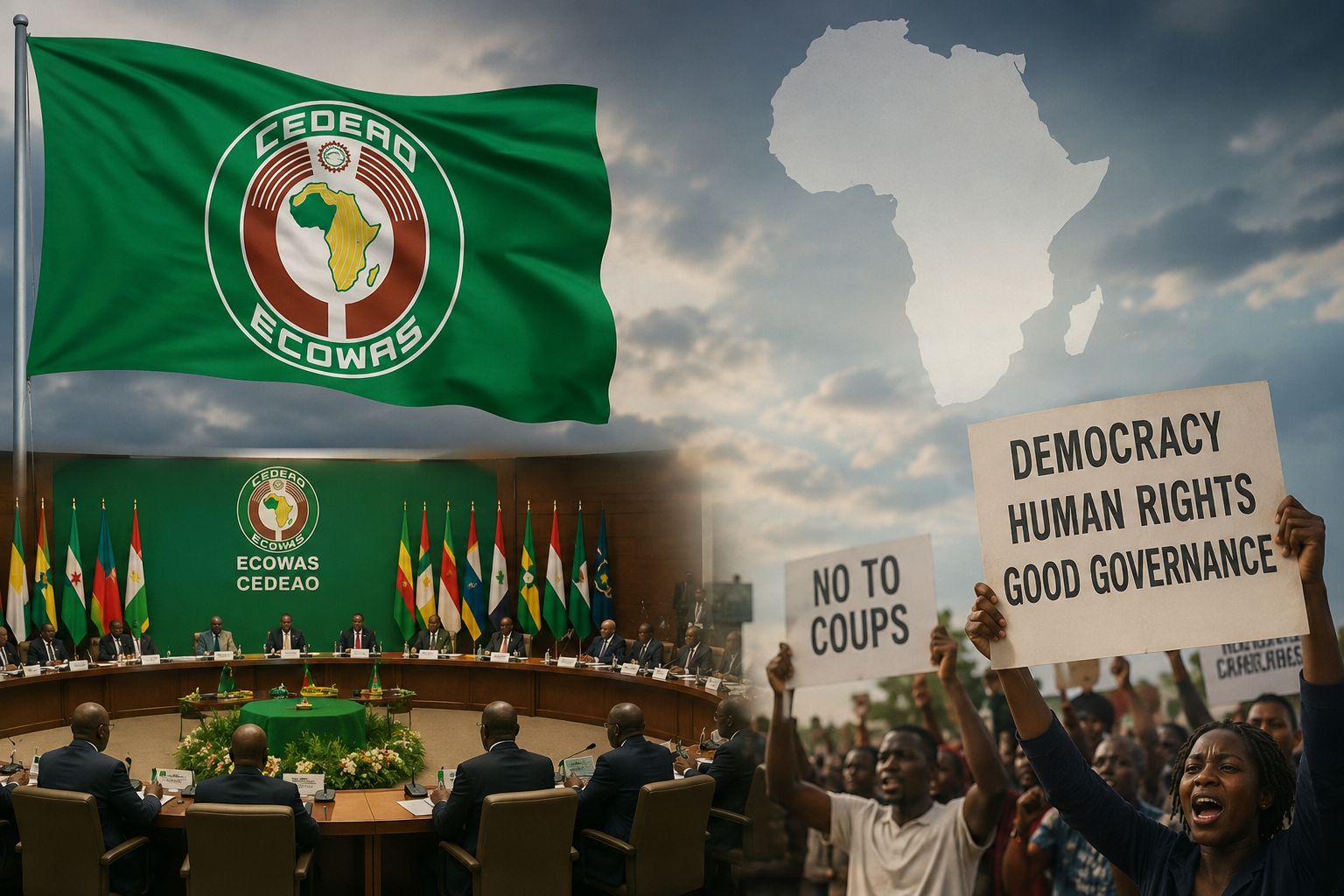
This article seeks to explain the causes and processes of varied outcomes of democratic reforms in West Africa and the roles of the Economic Community of West African States (ECOWAS) in deepening or undermining democracy in the subregion. Following the third wave of democracy (Huntington Citation1991; Diamond et al. Citation1997), during the 1990s many countries in West Africa transitioned from autocratic regimes into democratic regimes, at least in terms of formally instituting competitive multiparty electoral systems. I propose to explain why some countries have experienced democratic consolidation, and why there have been some reversals and retreats, as well as to examine the role of ECOWAS and its institutions in democracy building, consolidation or dis-consolidation in the subregion. The recent coups in several African countries such as Mali, Niger, Gabon, Guinea and Burkina Faso, as well as the exit from ECOWAS by three of these countries five decades into the existence of the regional organisation, present new dynamics that merit a multidimensional examination of the actorness of ECOWAS in not only promoting democracy but also ensuring that democracy fosters genuine participation and inclusive development (Obadare and Patel Citation2024).
As a regional economic community, ECOWAS has instituted various institutional organs and processes, such as the ECOWAS Protocol on Democracy and Good Governance, Council of the Wise, Directorate of Political Affairs, Peace and Security (PAPS) and the ECOWAS Parliament, among others, to achieve its stated goals of promoting economic integration, democratic governance, peace and security in the subregion (Van Vyk Citation2020; Aggad and Miyandazi Citationn.d.). The organs were established to promote the shared goals and values of democracy in line with the African Union’s Charter on Democracy, Election and Governance. How these institutions perform their roles has determined the extent to which they have deterred or undeterred unconstitutional change of government and deepen democracy in the subregion. This paper also analyses how the limited capacity of the key ECOWAS institutions such as the Assembly of Heads of State and government institutions to prevent the actions of key political actors in undermining democracy through change in constitution, manipulation of the electoral processes and the disconnect between citizens’ expectation of the gains of democracy and the reality are contributing to unconstitutional change of government and undermining democracy.
I hypothesise that many factors, such as the nature and character of a state and its political elites, the historical forces that culminated in the return to democracy, the role of the civil society, the political economy of the member states of ECOWAS and the degree of freedom for political participation by the citizens affect the extent of democratic consolidation or dis-consolidation in West Africa. For example, Ake (Citation1996, 9) discusses the contradictions between the nature of the state and democratic aspirations in Africa thus:
one of the most remarkable features of democratization in Africa is that it is totally indifferent to the character of the state. Democratic elections are being held to determine who will exercise the powers of the state with no questions asked about the character of the state as if it has no implications for democracy. But its implications are so serious that elections in Africa give the voter only a choice between oppressors. This is hardly surprising since Africa largely retains the colonial state structure, which is inherently anti-democratic, being the repressive apparatus of an occupying power.
As it is increasingly turning out, democracy is failing due in part to the lack of the embeddedness of the state in the society, the disconnection between the political elites and the citizen, the vacuousness of the political parties and their programmes as well as the ways in which the political processes are organised in the various member states.
The latitude and capacity of ECOWAS to mediate in the crisis of democracy that is engulfing the region is largely dependent on the nature of the state and the character of the elites. Where the state is populous and relatively well endowed, as in Nigeria and Ghana, the regional organisation is limited in the extent to which it can mediate in conflict. Although ECOWAS mediated in the crisis and eventual war that broke out among competing political gladiators in Côte d’Ivoire in 2010, 2011, 2016 and 2020, these interventions could not prevent the war and the crisis that ensued (Acord, 24 April 2021). Democracy is failing in the subregion because the actorness of ECOWAS in mediating competing powers and interests in the member states is severely constrained by the functionality of the institutions. More importantly, although ECOWAS was founded to promote economic integration and foster socioeconomic development in the subregion (ECOWAS 1975), the scorecard of the organisation in this respect leaves much to be desired in the way poverty and inequality continue to define the daily experiences of the lives of majority of the citizens. Democracy hangs in the balance and is highly susceptible to reversal when the citizens feel excluded from the democratic dividends such as jobs, sound social services like education, health and access to water.
This paper is based on primary data obtained during a research visit to Abuja, Nigeria, in 2018. The qualitative research is based on interviews conducted with officials of ECOWAS and civil society organisations as well as archives from regional organisations and secondary data. Documents from the ECOWAS archives relating to democracy and its consolidation as well as the related challenges were also used to analyse the research questions.
This article is focused on the role of ECOWAS in either promoting or undermining democracy. In studying this, the objective is to identify the factors that are most influential in causing successes and failures of democratic consolidation in the subregion and the roles of the ECOWAS Commission and other institutions in this process. The overarching questions are: what factors are most influential in causing successes and failures of democratic consolidation in West Africa, and what factors determine the successes or failures of ECOWAS interventions in either promoting or undermining democracy? I found that ECOWAS has played some role in the consolidation of democracies in the subregion through involvement in solving political problems, mediating conflicts, institutionalising pre-election through the early warning system, Panel of the Wise, supporting election monitoring and building capacity of civil society groups. However, recent coups have put to test the commitment of ECOWAS to its Protocol on Democracy and Good Governance due to the complexities of the coups, the weakened capacity of Nigeria as a regional hegemon to coordinate both diplomatic and non-diplomatic regional responses, and the weak and inconsistent responses by ECOWAS especially in addressing the supply-side factors that led to the crises.
Scholars have argued that regional or international organisations play important roles in democratic consolidation by serving as platforms for mobilising support by political elites. They are also used by young democratic regimes to consolidate reforms (Pevehouse Citation2002). According to Pevehouse (Citation2002, 611) regional organisations serve as a commitment device to bind elites (both those in favour and those against new institutions) to reform. This commitment arises from the political and economic costs incurred by joining international organisations and failing to abide by these agreements. Although ECOWAS was formed in the throes of the military era in West Africa and indeed worked within the framework of the various military regimes, the organisation quickly asserted its role by aligning with democratic values following the third wave of democracy. The 1999 return to democracy in Nigeria, the regional hegemon, could have contributed to the adoption of the Protocol on Democracy and Governance. Although ECOWAS is not a supranational organisation in which the member states surrender some of their sovereign rights, it has been operating to promote norms, and values of democracy. In other words, the pursuit of convergent interests among member states is one of the reasons why states join international or regional organisations (Peevehouse Citation2005). For ECOWAS, the third wave of democracy, which as I noted above was brought about by both domestic and external pressures, created common values and interests to which members subscribed. The supply-side factors such as pressures from international communities, and the associated conditionalities such as commitment to return to multiparty elections before loans can be accessed, represented strong incentives for maintaining membership in such a regional organisation. The legitimacy that regional organisations provide to political leaders, such as election observation, fostering peace between competing political elites, exemplifies democracy from above (Prevenhouse Citation2002, 611).
The rest of this paper proceeds as follows. In the second section, I discuss the broad commitments of ECOWAS to democratic consolidation in West Africa in terms of how its various organs function to promote democracy. In the third section, I analyse the actorness of ECOWAS and institutions in mediating in the political processes in the subregion, using several case studies of where it has intervened. In the fourth section, I discuss the challenges of ECOWAS in advancing democratic consolidation from a political economy perspective and how these challenges are unwittingly leading to dis-consolidation of democracy in various ways. In this section, I argue that apart from the limited capacity of the various ECOWAS institutions to rein in erring political gladiators who subvert the constitutions of their countries to prolong their terms in office, the inability of the regional organisation to ensure complete decolonisation, especially in the Francophone part of the region, and the strong disconnect between an avowed commitment to democratic ideals and a lack of corresponding commitment to promote economic empowerment of the citizens leave little or no room for ECOWAS to prevent military coups and unconstitutional changes of government.
Although ECOWAS has been touted as one of the most successful regional integration experiences in Africa and has indeed promoted some level of intra-Africa trade (see Obadare and Patel Citation2024), there are high levels of poverty, unemployment and increased insecurity in its member states. Some of its treaties, such as the ECOWAS Trade Liberalisation Scheme and the Right of Establishment of businesses by citizens from one member/state in another country have not been very effective. These challenges create vulnerability and call into question the legitimacy of the state and ECOWAS to provide an abundant life for the citizens. While previous military regimes did not change the existential conditions of the citizens, the failure of the third wave of democracy to bring about tangible benefits to the citizens has led to what scholars have referred to as democratisation of disempowerment (Oloruntoba Citation2016; Ake Citation1994). The feeling of disillusionment and the frustration of rising expectations inevitably create a governance-development vacuum, which the military always claimed they intervened to fill, not because they have any new or original idea to bring about the needed socioeconomic revolution but because of their unique access to instruments of coercion.
ECOWAS and democratic consolidation in Africa: institutions, norms and actions
As a subregional organisation, ECOWAS was formed in 1975 to promote regional integration and economic cooperation in West Africa. Headquartered in Abuja, Nigeria, ECOWAS spans an area of 5.2 million square kilometres, with 15 member states: Benin, Burkina Faso, Cabo Verde, Côte d’Ivoire, The Gambia, Ghana, Guinea, Guinea Bissau, Liberia, Mali, Niger, Nigeria, Sierra Leone, Sénégal and Togo (Economic Community Of West African Studies Citation1975). It has an estimated collective population of 393.4 million. Mali, Niger and Burkina Faso withdrew their membership from this organisation in 2023/2024 due to the way the organisation responded to the military takeover in these countries.
From its inception, Nigeria and Togo played very prominent roles in ensuring that ECOWAS became a formidable organisation that contributes to promoting economic development through regional integration. Its stated aim is
to promote co-operation and integration, leading to the establishment of an economic union in West Africa in order to raise the living standards of its peoples, and to maintain and enhance economic stability, foster relations-among [sic] Member States and contribute to the progress and development of the African continent. (ECOWAS Citation1993, 5)
In pursuit of this aim, ECOWAS is made up of several institutions, spanning executive (ECOWAS Commission), legislative (ECOWAS Parliament) and judicial (The Community Court of Justice) bodies. Given the military background of the main architects of ECOWAS, including General Yakubu Gowon of Nigeria and Colonel Gnassingbé Eyadéma of Togo, issues of democracy promotion were not among the priorities when the organisation was formed. The prevalence of military coups and countercoups in the region in the 1970s and 1980s did not create incentives for regional policies or actions on democracy. As Cowell (Citation2011) notes, of the 15 member countries of ECOWAS, only two, namely Senegal and Cape Verde, have not experienced military coups or attempted coups. Nigeria, the regional hegemon, was a site of coups and countercoups from the 1960s until the country returned to a stable democratic rule in 1999 (the only exception being from 1979 to 1983 when there was a brief civilian rule). Ghana, Burkina Faso, Niger and other countries have witnessed series of coups. Mali, which was a relatively stable democratic country from 1991 to 2012, has returned to frequent coups and counter coups (see Iroanya Citation2018). Ajala (Citation2023) makes this point when he notes that seven coups d’état have occurred in these regions since 2020, four of which were successful, with the coup in Niger in July 2023 being the most recent, following those in Guinea, Burkina Faso and Mali.
A deeper sense of community and the need to move from purely economic to political cooperation developed among ECOWAS member states following the wars in Liberia and Sierra Leone in 1989/1990 to 1998. The formation of the ECOWAS Monitoring Group (ECOMOG) contributed to bringing peace to the two countries. As Cowell (Citation2011) notes, the 1999 Mechanism for Conflict Prevention, Management and Resolution put ECOMOG on a permanent footing and expanded its functions to allow it to conduct more complex peacekeeping missions.
The lukewarm attitude to democracy in the subregion changed with the third wave of democracy in the 1990s, followed by the transition of the Organisation of African Unity to the African Union and the commitment of the continental organisation to democratic ideals. It is important to note, though, that the third wave of democracy was largely fuelled in Africa by the need for foreign aid and pressures from international community, especially the International Monetary Fund and the World Bank, as well as civil society organisations. Thus, the change did not happen due to a new charter of state–society relations, nor because the long-serving military rulers were ready to turn the tide from military to democratic governments. The transition to democratic rule in several of the countries started on a faulty foundation in terms of both its theoretical and philosophical underpinnings and its operationalisation within a dependent peripheral region of the world (Ake Citation1996). These material conditions and internal contradictions have affected the normative roles and effectiveness of ECOWAS in promoting or deepening democracy in the subregion.
The roles of ECOWAS in deepening democracy or undermining it have played out in different settings and with different outcomes in the subregion. The efficacy of the organisation in performing these roles cannot be divorced from the domestic dynamics of how the political elites and key actors in these countries respond to democracy. More importantly, the relevance of ECOWAS in advancing democratic ideals or hindering them has a direct correlation to citizens’ perception of democracy in terms of how it can help in meeting their daily needs. As the recent coups also show, the relevance of ECOWAS largely depends on the extent to which the military has effectively submitted to civilian authority (Institute of Security Studies Citation2023). A lack of submission to civilian control creates incentive for regular military coups.
Additionally, how ECOWAS has responded to the various changes in constitutions that allowed sitting presidents to prolong their terms in the office are indications of the institution’s capacity or lack thereof in mediating political conflicts. Whereas the subregional organisation always reacts by threatening the use of force and imposition of sanctions any time the military takes over in a member state, the voice of the organisation is virtually absent when leaders change the constitution to prolong their tenures. According to the Institute of Security Studies (Citation2023, 2),
11 attempts have been made since 2003 to extend presidential terms in seven countries. These were Burkina Faso (2005 and 2014), Togo (2005 and 2015), Benin (2006, 2010 and 2019), Guinea (2020), Côte d’Ivoire (2020), Senegal (2023) and The Gambia (2020 to 2021).
While some, like Togo and Côte d’Ivoire, have succeeded, internal democratic forces prevented tenure prolongation in Senegal. The mute indifference of the ECOWAS Commission to changes in constitutional term limits have increased incidences of unconstitutional change of government in West Africa, especially in a country like Guinea where issues of governance were partly responsible for the coup d’état in that country in September 2021. The lack of action on the part of ECOWAS to prevent leaders from changing the constitution explains why Ajala (Citation2023) argues that regional and continental organisations must take a strong stand against constitutional manipulations by incumbent presidents and ensure that democracies deliver dividends to the people.
It is important to emphasise that within the subregions, there are divergences in the way in which the factors listed above have shaped democratic outcomes. Deep legacies of historical legitimacy and coalition and consensus building among political elites on the imperative of building a culture of democracy appear to be particularly influential in the democratic consolidations in Ghana and Benin. The political elites in these countries behave in a manner that suggests that they regard democracy as the ‘only game in town’, which is in fact a key element of democratic consolidation. At the same time, countries such as Mali, Guinea, Burkina Faso and Niger (before their withdrawal) which have witnessed democratic reversals appear to lack such political consensus and commitment to democratic culture. But this may not fully explain the rapid return to military rule in the latter countries.
Apart from the divergences in the political history of these countries, statements from the coup plotters show a seeming consensus on the rejection of a form of neocolonial control of their economies, especially by France, which ECOWAS has not been able to address. The lack of concern or capacity by ECOWAS to address the intrusive French neocolonial control of the economies, corruption among political elites and the resultant poverty that this unleashed on most of the citizens underpinned the support enjoyed by the military rulers from the pauperised citizens. For these citizens, the violation of the ECOWAS Protocol on Democracy and Governance by the military juntas means nothing if it did not connect to changes in their economic fortunes (Ajala Citation2023). The next section analyses the democratic norms and institutions responsible for promoting democracy in ECOWAS.
Democratic norms and institutions in ECOWAS
Due to its commitment to the promotion of democracy, ECOWAS has put in place several protocols and norms. In this section, I analyse how the regional organisation has instrumentalised the various institutions and norms in the promotion or undermining of democracy. The norms include the Protocol on Democracy and Governance 2001, Supplementary Protocol on Conflict Prevention 1999, and Zero Tolerance for Unconstitutional Regimes. The institutions, on the other hand, include the ECOWAS Commission, ECOWAS Court of Justice, ECOWAS Parliament and ECOMOG (ECOWAS Monitoring Group) and the Authority of Heads of State and Government (ECOWAS 2024).
ECOWAS Commission
The ECOWAS Commission is the administrative organ of ECOWAS which is responsible for overseeing the implementation of democratic policies and monitors governance trends in member states,
It is the institution responsible for coordinating all the activities of the organisation in its efforts to promote democratic consolidation.
In this regard, it coordinates the Early Warning Mechanism (ECOWARN), which is a system used to identify and respond to political and security threats that may undermine democracy in the subregion. While the early warning system has played important roles in restoring democratic order in The Gambia, Togo and ensuring the results of elections are accepted in several countries in the subregion, challenges to political reforms remain. The respondents at the ECOWAS Commission and at ECOWAS Secretariat and the civil society organisation all agree that the early warning system has been instrumental in promoting the norms of democracy in Africa (field notes, 2018). Like all the other mechanisms of ECOWAS, the functionality and effectiveness of the early warning system depend on the local dynamics of the respective countries, especially in relation to the commitments of the political elites in respecting the institutional authority and integrity of ECOWAS. The Commission also coordinates the Election Observation and Support, and Mediation and Conflict Resolution, as well as Capacity Building and Institutional Development. In the context of the Election Observation and Support, ECOWAS regularly deploys election observation missions (EOMs) to member states during electoral periods to ensure credibility and transparency. The organisation also provides both technical and financial support to electoral management bodies in countries with fragile institutions. This is done more frequently in post-conflict states. Through its Mediation and Conflict Resolution roles, the Commission has regularly intervened in member countries experiencing political crisis and disputes. These interventions have been a mixed bag, with both domestic and external forces playing important roles in the eventual outcomes.
In 2017, ECOWAS successfully facilitated a peaceful transfer of power from Yahya Jammeh to Adama Barrow in The Gambia after the former reneged on his earlier concession of defeat to the latter. In this instance, ECOWAS deployed all its organs and institutions to restore democratic order. When it appeared that the various efforts by the Panel of the Wise, made up of past heads of state in the subregion, would not yield any result, the ECOWAS Commission resorted to the deployment of force. Both the African Union and the United Nations Security Council backed this move by ECOWAS. According to Hartman (Citation2017), the success of ECOWAS in using the threat of force to resolve the conflict and support Adama Barrow, who requested the intervention, was due to four main factors. He puts it this way:
Four main factors explain the behaviour of ECOWAS and its success: ECOWAS had a clear legal mandate to threaten the use of force in order to protect democracy in one of its member states; there was consensus that ECOWAS forces could have coped with the relatively small Gambian army; the Gambian president could not rely on friends among his regional peers or some powerful ally from outside Africa; and regional leaders such as Nigeria and Senegal made a credible commitment to the regional intervention. While the intervention was a victory for pro-democratic activist regionalism, the specific West African conditions make a diffusion of the model to other parts of Africa unlikely.
The above observation is poignant. The smallness of The Gambia and other extenuating conditions made the intervention of ECOWAS successful. This experience has been in sharp contrast to the failure of the organisation to restore constitutional order in Mali, Guinea, Niger and Burkina Faso over the past four years. Although ECOWAS deployed all its organs to engage in mediation, imposed sanctions and even threatened military action following military coups, the military leaders in the latter cases did not back down. Rather, Mali, Niger and Burkina Faso exited the organisation and formed their own confederation. All the efforts made by the leaders of ECOWAS to bring the three countries back into the fold have fallen on deaf ears.
Although the treaty establishing ECOWAS made it mandatory for members wishing to exit the organisation to provide notice of one year, these countries did not wait before taking their leave. The military leaders left because they perceived that ECOWAS has become a lackey of the West, especially France. Although this decision to exit the organisation could worsen both the economic and security situations that led to the coups in the first place, the groundswell of support that the coup leaders have enjoyed from the population could provide them with the support to define their new realities.
Regardless, the inability of ECOWAS to restore democratic order in these countries, or at least prevent them from exiting the organisation, is incontrovertible evidence of its weakened capacity. Although the exit happened under Nigeria’s presidency of the organisation, the domestic challenges facing the regional hegemon as well as the cultural relationship that exists between Nigeria and Niger made the possibility of military action nearly impossible (Oloruntoba Citation2023). As Nigeria led other members of ECOWAS to threaten military action against the junta in Niger, the governors of Northern Nigeria, with which the Niger Republic shares a long border, openly objected to the idea. What later emerged was the use of non-state actors such as Muslim leaders to mediate and seek a rapprochement. This further calls into question the efficacy and capabilities of ECOWAS organs and institutions.
Through its capacity building and institutional development functions, the Commission also trains political parties, civil society organisations and media on how to uphold democratic principles, foster accountability and enhance citizens’ rights. Decisions of Heads of Government of ECOWAS are carried out through the Commission. Hence, it provides a connection between the organisation and the member states on political, economic and security issues, among others. It is also responsible for liaising with the African Union within the context of the principle of subsidiarity that undergirds their relationship. The success or failure of ECOWAS in promoting democratic consolidation or dis-consolidation is a function of the capacity of the Commission to organise the various organs to engage all critical stakeholders both within and outside the region, to address emerging challenges.
ECOWAS Parliament
The next important organ of ECOWAS is the ECOWAS Parliament. It was not one of the organs of the organisation when it was formed in 1975; rather, it was brought into being in 2002 by the Authority of Heads of State and Government (Nwosu Citation2024). The Parliament was established to provide a platform for West African citizens to participate in the decision-making of the regional organisation and to own the integration process. The Parliament was also aimed at ensuring that ECOWAS fulfils its aim of becoming an Economic Community of People by 2050 (Nwosu Citation2024). Although its decisions lack binding power, members of the regional parliament have participated in observing the conduct of elections across the continent. It has also contributed to resolving political logjams through what Nwosu calls parliamentary diplomacy.
A typical example was how the parliament assisted in resolving the political crisis that erupted in Siera Leone in in 2018. As a post-conflict state, any political crisis in Sierra Leone can lead to fresh conflagration. Thus, the refusal of the ruling party to accept the results of the election –which saw a presidential victory by the opposition party led by Julius Maada Bio – could worsen the political crisis. According to Nwosu (Citation2024), the disagreement observed between the Member of Parliament from the opposition Sierra Leone Peoples Party (SLPP) and those from the defeated ruling party, the All Peoples Congress (APC), raised the spectre of a very serious political crisis. To nip this crisis in the bud, the ECOWAS Parliament, under the direction of its Speaker Moustapha Cisse Lo, sent a parliamentary mission that worked in concert with the ECOWAS Delegation to restore calm and brought about a peaceful transfer of power to the opposition party. While this intervention may have been a successful outing, the regional parliament has not always succeeded. In November 2024, the delegation was unable to resolve the crisis that has recently engulfed the Liberian parliament. According to Lomaz (Citation2024), ‘central to the dispute are allegations against Speaker Koffa and disagreements over the legitimacy of actions taken by the “majority bloc”, including its decision to relocate legislative sessions to the joint chamber’. At the end of the visit, the Speaker of the ECOWAS Parliament, Rt. Hon. Hadja Memounatou Ibrahima, concluded:
Although it successfully brought both parties to the negotiating table and after several rounds of in-depth discussions with stakeholders on the contending issues, in an effort to reach an amicable settlement, the parliamentary delegation notes that the parties were not able to arrive at a favourable conclusion within the timeframe of the mission. However, the parliamentary mediation delegation remains fully seized of the issues at stake and continues to engage with the parties concerned to ensure that the desired outcome is achieved.
The intervention of the ECOWAS Parliament in the crisis is a further testimony to its actorness in advancing democratic governance. Although it is a purely domestic challenge, the organisation decided to intervene as part of its obligation to ensure political stability and good governance. However, it is important to emphasise that the ongoing political conundrum in Liberia is one of the broader crises of democracy in Africa. Although disagreements are common in democracies around the world, the likelihood of spiralling out of control, especially in a post-conflict state like Liberia, necessitated the engagement of ECOWAS.
Protocol on democracy and governance
The Protocol on Democracy and Good Governance was adopted by the leaders of ECOWAS in December 2001 as the main norm for the promotion of democracy and good governance. It is similar to the African Union Charter on Democracy, Election and Governance, which was passed in 2003 (African Union Citation2003). The Protocol is made up of sections and articles that lay out the conditions and norms of democratic practice such as constitutional convergence, elections, change of government, the role of the military in democratic practice and the need to enhance socioeconomic development through democratic means.
Article 1 of the Protocol states the constitutional convergence principles upon which the democratic process should be based (ECOWAS 2001). This section of the Protocol is vital as it provides the template upon which democratic governance rests. Apart from ensuring the separation of powers of the main organs of the government, it clearly emphasises the salience of election as the only acceptable means for change of government (Article 1(b), every accession to power must be made through free, fair and transparent elections; Article 1(c) zero tolerance for power obtained or maintained by unconstitutional means; Article 1(d) popular participation in decision-making, strict adherence to democratic principles and decentralisation of power at all levels of governance; Article 1(e) the armed forces must be apolitical and must be under the command of a legally constituted political authority: no serving member of the armed forces may seek to run for elective political office) (ECOWAS 2001). The clause on constitutional convergence implies that the member countries of ECOWAS will domesticate the Protocol and ensure compliance when necessary (see Cowell Citation2011).
Several aspects of this Protocol have been tested and operationalised since it was adopted in 2001. In response to the question on what the mechanisms are used by ECOWAS to promote the norms of democracy among its member states, an official at the ECOWAS Secretariat in Abuja referred to this Protocol as the guiding light. He noted: ‘all the member states of ECOWAS are expected to comply with the provisions of this Protocol before, during and after elections’. A representative of the Centre for Democracy in Abuja concurs with this point when she notes that ‘members of ECOWAS are held to account to ensure they comply with the provisions of the Protocol, when preparing for elections’ (field notes, 2018).
A critical analysis of Article 1(b) shows that not all ECOWAS members have complied with this norm in its entirety. Starting from Nigeria, which is the regional hegemon and main financier of the subregional body, the conduct of elections has been a subject of litigation, disputes and dissatisfaction since the return to democracy in 1999. In what Agbaje (Citation2024) refers to as a republic of dashed hopes, elections at various levels have not met the thresholds of free, fair and transparent practice as set out in the ECOWAS Protocol. With the exception of 2015, when the opposition party won a presidential election that was considered to be fairly credible, the results of virtually all elections have been contested by political gladiators at the federal and state levels, and the outcome has been decided by the judiciary, rather than the people. That the judiciary has always been the final arbiter shows the limits and weaknesses of other democratic institutions, especially in light of the various allegations of corruption against this arm of government. Although the various respondents in Abuja argued that ECOWAS usually deploys critical organs such as the Panel of the Wise to ensure that political parties and their candidates adhere to the conditions of the above Protocol (field notes, 2018), these pre-election interventions have not been able to prevent rigging, vote buying, intimidation and subversion of the will of the people. It is important to highlight that the limited ability of ECOWAS institutions to prevent the regular incidence of electoral fraud in Nigeria could be due to the sheer size of the country as well as its massive contribution to the formation and operation of the regional organisation. As the largest funder of ECOWAS, it is difficult if not impossible for Nigeria to be suspended from the organisation even if the country violates one of the basic articles of the organisation such as ensuring free and fair elections. But this issue is not limited to Nigeria. In Côte d’Ivoire, Alassane Ouattara, the current president, has changed the constitution and is now in his third term. ECOWAS was not able to persuade him to do otherwise.
One of the ways in which ECOWAS’s commitment to democracy has been tested over the past 24 years since adopting the Protocol on Democracy and Good Governance pertains to Article 1(c): zero tolerance for power obtained or maintained by unconstitutional means. From Mali to Niger, and from Burkina Faso to Guinea, coups have become a regular occurrence in West Africa in the past few years. Using the case of Guinea as an illustrative example, Odubajo and Ishola (Citation2024) show how Alpha Conde, two-term President of Guinea Republic, was toppled in a military coup in September 2021. They argued that before this unconstitutional change of government took place, Conde had attempted to change the constitution from its two-term limit to allow him to contest for another term. In what these scholars call the wanton display of ‘executive aggrandisement’ and ‘strategic election manipulation and harassment’ (52), Conde misappropriated power, silenced the voices of the opposition and subverted the extant rules in his attempt to prolong his stay in office. While these things were going on, ECOWAS did not stop the incumbent from changing the constitution. Thus, this calls into question the legitimacy of the regional organisation when it woke up to take actions against the coup plotters after staging the coup.
Nor was this the only instance where ECOWAS had failed to act when it mattered most. As noted in the preceding section, in Mali, Niger and Burkina Faso, the democratically elected governments have not only failed to uphold democratic ideals but also failed in other important duties of the state, namely to ensure the protection of lives and citizens and to guarantee regularity of elections. Article 1(d) provides for popular participation in decision-making, strict adherence to democratic principles and decentralisation of power at all levels of governance. When the political elites failed to observe the provision of this article, it put the observance of subsection (e) of Article 1, which states that the armed forces must be apolitical and must be under the command of a legally constituted political authority, into jeopardy. Although the internal political dynamics in these countries differ, the conditions that necessitated the military takeovers were indications of the limited capacity of ECOWAS to prevent the conditions that can lead to the violation of the extant Protocol on the promotion and consolidation of democracy in the subregion. Although ECOWAS is not a supranational organisation to which the member states have surrendered full or all sovereignty, the Protocol on Democracy and Governance is one that members willingly subscribed to. Thus, when members wantonly disregard such treaties and the organisation lacks the power to persuade them to change course, it is an indication that the relevant institutions are weak. This could also be an indication that the members are of the opinion that their interests are not being served. Countries belong to regional organisations because of the expected benefits, such as collective security, higher volume of trade, better capacity to negotiate trade deals with third countries or flow of investments. The extent to which the institutions of the regional organisation can ensure that these needs are met is the extent to which the members will be committed to its objectives. The challenges of democratic consolidation and the roles that ECOWAS has played over the years cannot be divorced from the value that the members place on democracy.
An honest assessment of the performance of ECOWAS in terms of democratic consolidation shows that the regional body has not succeeded. Ronceray (Citation2023, 3) puts this very succinctly:
But beyond its lack of success at stopping unconstitutional changes of government, ECOWAS also failed to limit presidential mandates and to call out problematic (re-) elections of leaders and cases of alleged corruption. In other words: it has been selective in enforcing democratic norms and focused primarily on attempting to protect elected heads of states from coups.
This points further validates the earlier argument that the political elite in the subregion have only subscribed to the norms of democracy at a nominal level. This complexity is further reinforced by the way the institutions of ECOWAS function. The Authority of Heads of State and Government, which is made up of the executive heads of the member states, is the most powerful organ of the subregional organisation. Regardless of the differences among these leaders, there are reasons to believe they act to protect themselves in office, especially as relates to the regular incidences of tenure prolongation, manipulation of the electoral process and perpetuation in office (Ronceray Citation2023). The next section examines the authority of heads of state and government and their roles in democratic consolidation or decline.
The authority of heads of state and government
Article 7 (1) of the revised ECOWAS treaty establishes the Authority of Heads of State and Government as the supreme institution of the Community (Economic Community Of West African States Citation1993). Members of this institution are expected to be democratically elected. This principle is in consonance with the Supplementary Protocol on Democracy and Governance. By virtue of the ECOWAS Revised Treaty of 1993, and the Supplementary Protocol, the authority performs several functions, which include setting the overall policy directions of the organisation, supervising the activities of other organs of the organisation, creating other institutions for the ECOWAS Community, taking decisions in matters of conflict prevention, management and reduction, peacekeeping and security, humanitarian assistance, appointing the President of ECOWAS Commission, and authorising funding for the military (Rudy and Odhiambo Citation2016). The various interventions of ECOWAS in restoring democratic order in countries such as Togo, Niger, The Gambia and Côte d’Ivoire attested to the seeming commitment of this organisation to democratic organisation. The Authority has adopted various measures which range from diplomatic engagement to imposition of sanctions, suspension and threat of force to restore democratic order. The Authority can also appoint a mediator; such mediators engage with civil society organisations and other critical stakeholders to find solutions to lingering political crises. A notable example was how the coup in Mali was addressed. Once there is an assurance of a return to civilian rule, the sanctions imposed on the military juntas are lifted.
Despite its previous successes, the Authority could neither prevent nor resolve the political logjams that befell Burkina Faso, Mali and Niger in recent years. Whereas it followed all the usual steps by deploying diplomacy, imposing sanctions including closing of borders, and threatening the use of force, these did not dissuade the coup plotters. Rather, they became defiant and exited ECOWAS. Nigeria’s President Bola Tinubu, who was the Chair of ECOWAS, led other members of the organisation such as Ghana and Côte d’Ivoire to threaten the use of force to restore democratic order. While the threat of force succeeded in The Gambia, it failed in all of these countries. When official channels of diplomacy failed to convince the coup plotters, Tinubu sent Islamic emissaries to Niger – a country with deep historical cultural and religious roots with Northern Nigeria (TVS News, 24 August 2023). Governors and religious leaders in Northern Nigeria also opposed the use of force to compel the coup plotters to return to democracy. As noted above, the three countries, Burkina Faso, Mali and Niger, eventually left the organisation. The leaders of these countries accused ECOWAS of being a lackey of neocolonial powers such as France and continue to recast nationalistic sentiments. This decision caught the Authority unawares. Even when they rescinded their threat of force, the three military leaders remained adamant. Perhaps the Authority should have adopted a better strategy of engagement than the threat of force.
A political economy analysis of ECOWAS and democratic consolidation or dis-consolidation in Africa
While there are many reasons for the dynamics of democratic experiences on the continent, the capacity of the state and the nature of politics were key critical factors. In many of the states that have witnessed democratic retreats, the state has become too autocratic to be challenged by the civil society, while some are fraught with high levels of insecurity due to incessant attacks by terrorist groups. The weakness in the capacity of the states in Africa to effectively midwife and consolidate democracy points to the central role of regional economic communities. Regional economic communities such as the Southern African Development Community and ECOWAS have played roles in brokering peace among competing political parties, monitoring elections, persuading political opponents to accept defeat and ensuring that the incumbents who lost elections concede power to the winners. These interventions have achieved varying degree of success (Oloruntoba Citation2023).
Regardless of the lofty aims of ECOWAS to uphold the norms of democracy, the existential threats that confront countries in the subregion in terms of high levels of poverty, inequality, and insecurity make those high ideals far-fetched. Despite the premature celebration of an Africa that was rising about two decades ago (see Taylor Citation2014), Africa’s economy remains trapped in the peripheral zones of the world (Wallerstein Citation1979). The continued dominance of primary commodities and minerals and metals in the portfolio of exports, the increasing intensity of illicit financial flows, corruption in both public and private sectors, high debt overhang and limited capacity for domestic resource mobilisation are deepening poverty and dependency in the subregion. The high level of disillusionment that has befallen the citizens, due in part to the disconnection between the expectation that democracy will foster development and the reality of pervasive poverty, makes it difficult to sustain democracy in its current form. Apart from its overly expensive nature, there is the absence of conditions such as an active middle class that can sustain its practice. Also, many of the young citizens who are yearning for change and who might think that the military offers a better alternative were not born when the military held the region by the jugular in the 1970s–1990s.
For its part, the relevance of ECOWAS in advocating for democracy can only be effective to the extent that it can rally its members to foster more economic integration and prosperity, which were its original goals from inception (ECOWAS 1975).
Conclusion
This paper has examined the actorness of ECOWAS and its institutions in promoting the norms of democracy in West Africa. I argue that although the regional economic community does possess resources in the form of relevant organs and institutions and indeed tried to use these organs in promoting norms of democracy and constitutional order, there are domestic and external challenges that have constrained its effectiveness. Regaining lost relevance would require addressing the foundational problems associated with limited economic diversification and economic development in ways that can foster a better life for the teeming population of youths who are faced with existential threats of poverty, insecurity and hopelessness. This will also require addressing the rampaging problem of corruption and complicity of old and new external actors bent on maintaining the unequal exchange and exploitation that have been the lot of the continent since gaining independence.
Ethical approval
The respondents were informed of the purpose of the research and provided verbal consent both to be interviewed and for the data collected to be used for the research. The respondents did not want their names to be used because of the positions they occupy in the studied organisation. The interviews were conducted informally, based on the expertise of the respondents.
Disclosure statement
No potential conflict of interest was reported by the author(s).
Additional information
Funding
The National Research Foundation of South Africa provided funding for the travels to collect data for the research as part of my position as a rated researcher during the period.
Learn More