Wale Ketiku

Museums as Epistemic and Entrepreneurial Gateways

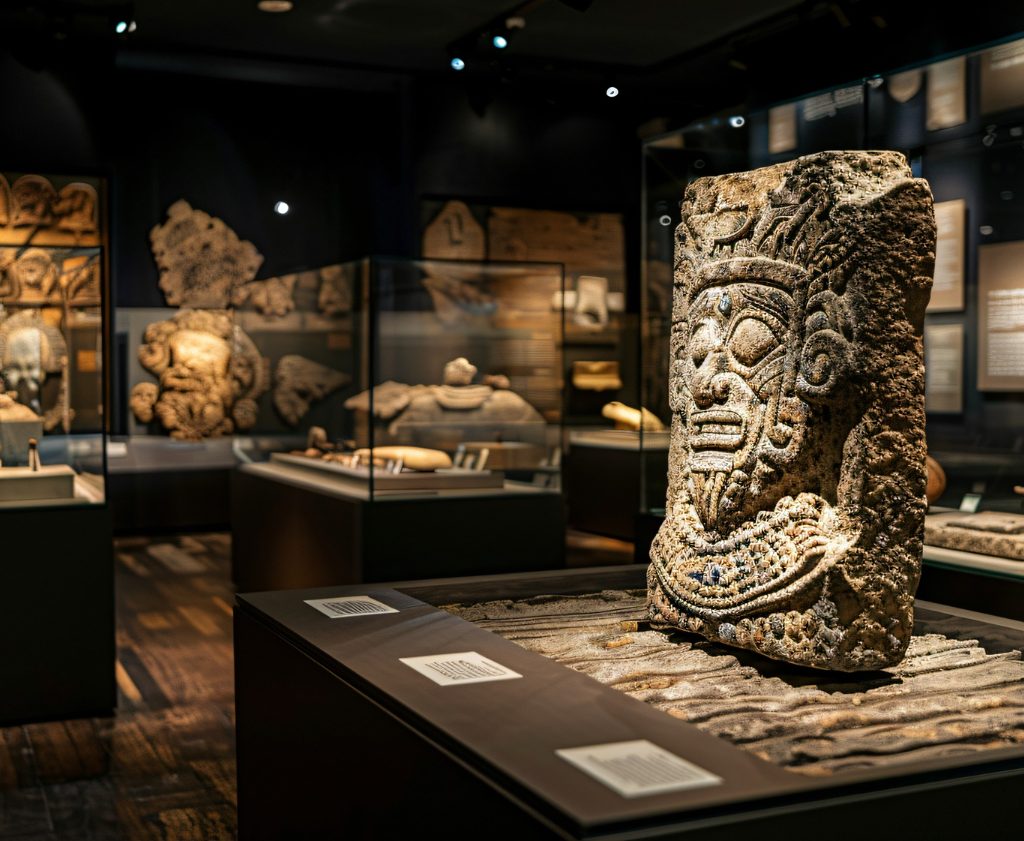
Museums as Epistemic and Entrepreneurial Gateways By Olanike Onimisi Department of Theatre Arts University of Ibadan, Nigeria The traditions of our indigenous communities are at great risk of being forgotten in a fast-paced world highly dominated by new technologies and digital experiences. A recent visit to the National Museum of Unity, Ibadan, roused within me a mixed feeling of pleasure and pain. Having my many questions answered with such fine details got me ecstatic about my new understanding of the indigenous people, histories, cultures and traditions of southwestern Nigeria as well as those from selected ethnic groups in other parts of Nigeria; but there was the disappointment at the scant patronage and seeming lack of interest in the very significant indigenous artifacts on display. Museum visits in 21st century Nigeria seem to not be a delightful pastime, at least not where there are multiple games arcades, shopping malls and the ubiquitous internet-enabled access to social media. Even watching movies like House of Ga’a or Amina seems more intellectually entertaining, even without a clue of the historical provenance of the cultural artifacts or storyline grounding the film. Entertainment is enough! But how many people, especially young adults today, can boast of the basic capacity to narrate the cultural histories and/or identify indigenous objects peculiar to their places of origins or immediate communities? For most children and youths in Nigeria, weekends, holidays or even some after-school hours spent in the vibrant chaos of video games or at the cinemas watching the latest blockbuster film appears to be far more appealing than a quiet afternoon in a museum. Yet, these institutions serve as vital epistemic gateways, offering invaluable opportunities for young minds to explore and understand their indigenous knowledge. But who are we to blame for this epistemological gap? Following the reintroduction of History in primary and secondary schools’ curriculum in recent years, what are the structures put in place to ensure that learning is fun and engaging, beyond the textbooks? Museums, for example, are places to combine education and entertainment. As school pupils and students observe artifacts and exhibitions, they can ask questions and ponder more about what they have seen or interacted with; and this is an exercise capable of fostering critical thinking in them as individuals and as a collective. Also, while the English language remains compulsory in determining the academic progress of the average pupil or student, no indigenous languages are. Thus, the combination of governmental cluelessness about the significance of indigenous knowledge and the technological definition of the knowledge society articulates a dangerous disinterestedness in the epistemological utility of historical and indigenous knowledges. Postcolonial museums, like the National Museum of Unity, as well as the Odu’a Museum and Hall of Fame in Ibadan, have challenges too – like ossifying the knowledges about cultural artifacts, or parroting just one narrative on some of the symbols as if that is the only narrative available. Or not properly indexing the diacritics on Yoruba words and concepts (for example at the National Museum of Unity, “Ṣìgìdì” should not be rendered as “Shigidi”). Or worse still, not having sufficient collaborative engagements to keep refreshing the displays with loans and purchases that could bring audiences and deepen the epistemological interests in indigenous knowledges and symbolic discourses and ideologies.  These are possible reasons for the dismal attendance at local museums and cultural conservatories. For instance, it was obvious that the crowd pull witnessed most recently at the National Museum of Unity was due to the pottery-making workshop with Akin Potter, facilitated by the French Institute of Research in Africa (IFRA); which recorded attendance by school students having interactive and immersive learning experiences. The workshop featured hands-on exhibits where all participants not only explored the museum (especially the pottery section), but also had access to clay and pottery equipment, using the different methods taught to mold various objects original to them. Apart from such external initiatives, local museums need to have a revolving plan to attract audiences who must be kept coming in curated anticipation. Maybe the audiences who prefer the game arcades and epic films desire a different dynamic for showcasing their indigenous histories to be able to find it worthy of attention.  Perhaps, an entrepreneurial approach could significantly improve the role and importance of museums in the consciousness of the populace. One effective strategy would be for museums to adopt an intentional approach in curating their narratives and engaging with the online community. Using such modern technologies like the internet and social media (Instagram, X, Facebook, WhatsApp, Threads, TikTok, YouTube, etc.), where most people across the age spectrum primarily consume and disseminate information, could be a self-marketing strategy for museums; while young people can be incorporated into the museum’s operations – whether through internships, paid positions, or volunteer programs. Recruiting young people to serve as ambassadors for the museum can also further enhance its outreach, because these young marketers (or influencers, as they are now called) can leverage their familiarity with social media and modern communication skills to craft engaging content that resonates with their peers. The interests of younger demographics who are accustomed to digital experiences can also be tapped into by incorporating virtual tours and interactive exhibitions in the museum’s activities.  Mobile apps can also be developed to deliver complementary resources that pique people’s interest and encourage them to explore further and continue conversations long after the museum experience. Considering that funding is a major hinderance to arts programming in Nigeria, museums can generate revenue by manufacturing and selling replicas of the artifacts they exhibit. This will partly reduce their reliance on government funding or patron donations and provide employment opportunities and international exposure to the expert local artisans who will be making these replicas, while also allowing visitors to take pieces of history home with them and showcase local craftsmanship on a global scale. Another game-changer could be museum partnerships with organizers of major annual events like the Detty December – a period of celebration in Lagos featuring back-to-back parties,

Museums as Epistemic and Entrepreneurial Gateways Read More »

THE ÀDÌRẸ INDUSTRY: CRAFTING INDIGENOUS CULTURE INTO ENTREPRENEURSHIP

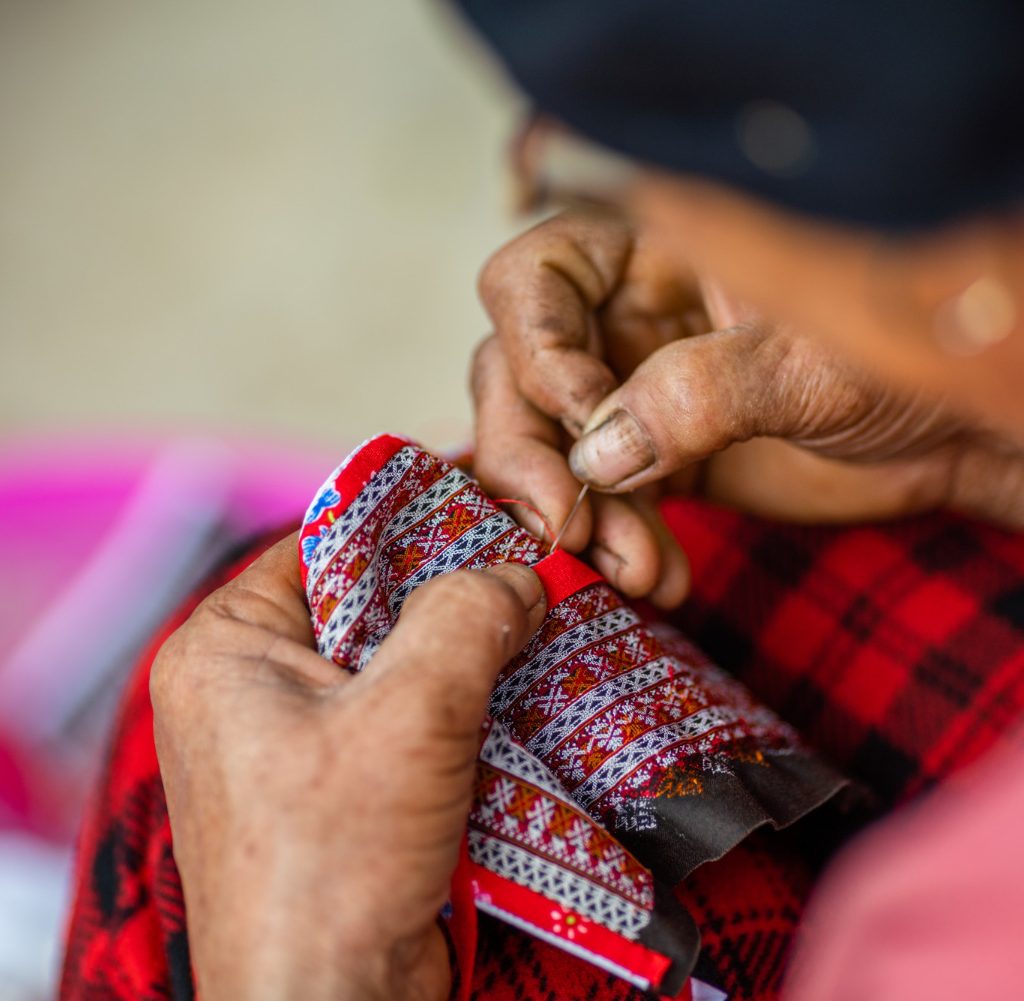
THE ÀDÌRẸ INDUSTRY: CRAFTING INDIGENOUS CULTURE INTO ENTREPRENEURSHIP By Blessing Tomoloju IBADAN RESEARCH WORKING GROUP, UNIVERSITY OF IBADAN Abẹ́òkúta is an ancient city located in the southwestern part of Nigeria. And it is famous for its deep heritage in Àdìrẹ. Little wonder, when one walks through Itoku, Asero, Ijeja, Kemta communities of Abẹ́òkúta, the rhythmic sound of dye pots bubbling and fabrics being beaten into brilliance echoes a timeless legacy. This is the sound of Àdìrẹ, the indigo-dyed textile craft that has flourished for centuries among the Yorùbá people of southwestern Nigeria. Àdìrẹ is more than fabric, it is cultural language, that is, a visual narrative of history, identity, and artistry that embodies the creativity of an entire culture Àdìrẹ, is a combination of two Yoruba words: “àdì” (to tie) and “rẹ” (to dye). And yet, Àdìrẹ is more than a fabric technology. It is a symbol of identity, an artistic expression, a cultural heritage that has been passed down from one generation to another. And beyond being an indigenous endeavor, it has entrepreneurial potentials. Àdìrẹ has been for many women a lifeline that has sustained their families for generations. And much more today, this Indigenous craft has also become a gateway to innovation, global recognition, and economic empowerment. Àdìrẹ production represents a notable example of how Indigenous knowledge systems contribute to entrepreneurship, cultural identity, and women’s empowerment in Africa. Àdìrẹ began centuries ago among the Ẹ̀gbá women of Abẹ́òkúta, who through mastery in indigo dyeing process, used natural materials, such as raffia strings for tying, cassava paste for painting patterns, and dye extracted from the elu (indigo) plant, to create beautiful designs patterns on handwoven cotton. Designs and patterns weren’t created arbitrarily or randomly. They were symbolic of the culture of the people. For instance, some of the designs and patterns such as olókun symbolized wealth and depth, named after the goddess of the sea; elébùté represented prestige; Ìbàdándùn meant “Ibadan is sweet.” These patterns were a silent language, recording history and community stories on cloth. This is to show that Àdìrẹ is an indigenous endeavor based on the fact that it is rooted in the culture and tradition of the people. Àdìrẹ is an indigenous endeavor that is deeply communal. Women, both young and old, are involved in it not only for the preservation of their culture but also as a means of survival and sustenance. This means that Àdìrẹ as an indigenous endeavor has entrepreneurial potentials. Even before the term “entrepreneurship” became fashionable, Àdìrẹ was an Indigenous business model that thrived on shared knowledge, cooperation, and trade, which are values central to African economic life. Beyond its beauty, Àdìrẹ has become a powerful economic engine. Across Nigeria, young entrepreneurs are breathing new life into the craft, blending traditional methods with modern business ideas. Fashion designers like Nike Davies-Okundaye championed Àdìrẹ on global stages, teaching women across Nigeria how to dye fabrics and create sustainable income. Historically, Àdìrẹ was not just about fabric; it was a medium through which communities told stories, expressed values, and sustained livelihoods. For many women, especially in Southwestern Nigeria, Àdìrẹ provided a source of income and independence, allowing them to contribute economically to their households and communities. It implies that Àdìrẹ production is not only a means of preserving cultural heritage, it is also a means of survival for many women in south West Nigeria. In many Yoruba communities, Àdìrẹ remains a women-led enterprise. For countless families, it provides daily income and independence. Initially the knowledge of Àdìrẹ was passed from mothers to their daughters and daughters-in-law. However, young women are now learning the craft primarily through apprenticeship, workshops and vocational programs, turning inherited skills into thriving small businesses. Each fabric sold doesn’t just carry dye, it carries a story of empowerment and legacy. The new generation of Àdìrẹ entrepreneurs is coming up with new designs and patterns. Instead of limiting designs to traditional indigo, they are trying out new designs while using environmentally friendly dyes. Some apply Àdìrẹ patterns to modern wear like sneakers, bags, or even laptop bags. This fusion of indigenous artistry and modern taste keeps the craft relevant and appealing to global audiences. In a world increasingly concerned about sustainability, Àdìrẹ offers a refreshing alternative. Its natural dyeing process and handmade nature make it an eco-friendly product. Conscious fashion brands are now collaborating with Nigerian artisans to promote slow fashion, celebrating craftsmanship and cultural preservation. It is pertinent to note that Àdìrẹ provides a connection between indigenous knowledge and economic development. It is not just about economic development; beyond this, it keeps Yoruba culture alive. Each motif and pattern continues to tell stories passed down for generations. Wearing Àdìrẹ is not just fashion, it’s storytelling. It’s a reminder that even in a modern world, our Indigenous roots still matter. The future of Àdìrẹ rests in the hands of those who see beyond fabric, those who understand that what began in dye pits and village courtyards in Mama Mapo’s compound (the first woman to make Àdìrẹ) can now inspire the world. Young designers are blending creativity with entrepreneurship; communities are preserving culture while earning a living. Definitely, the journey is not without challenges. Many artisans struggle with challenges of environmental factors, lack of modern tools, access to quality materials, modern equipment, and financing and declining interest among youths. The market is also flooded with machine-printed imitations from abroad, which undercut authentic handmade Àdìrẹ. Despite all these challenges lies opportunity. Àdìrẹ continues to thrive because of the commitment and resilience of women entrepreneurs. Their stories reflect not just survival but also innovation and adaptation in the face of adversity. The future of Àdìrẹ lies in embracing its cultural roots while expanding its economic potential. It is, therefore, not just fabric but a powerful symbol of Africa’s enduring heritage and entrepreneurial spirit. Àdìrẹ as an indigenous endeavor If properly supported, has the entrepreneurial potentials of becoming a model for how traditional crafts fuel sustainable development in Africa. It teaches us that

THE ÀDÌRẸ INDUSTRY: CRAFTING INDIGENOUS CULTURE INTO ENTREPRENEURSHIP Read More »

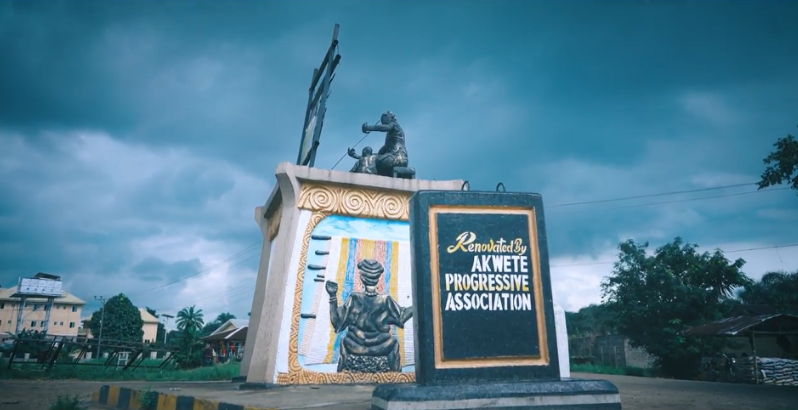
Akwete: Weaving Heritage, Empowering Generations

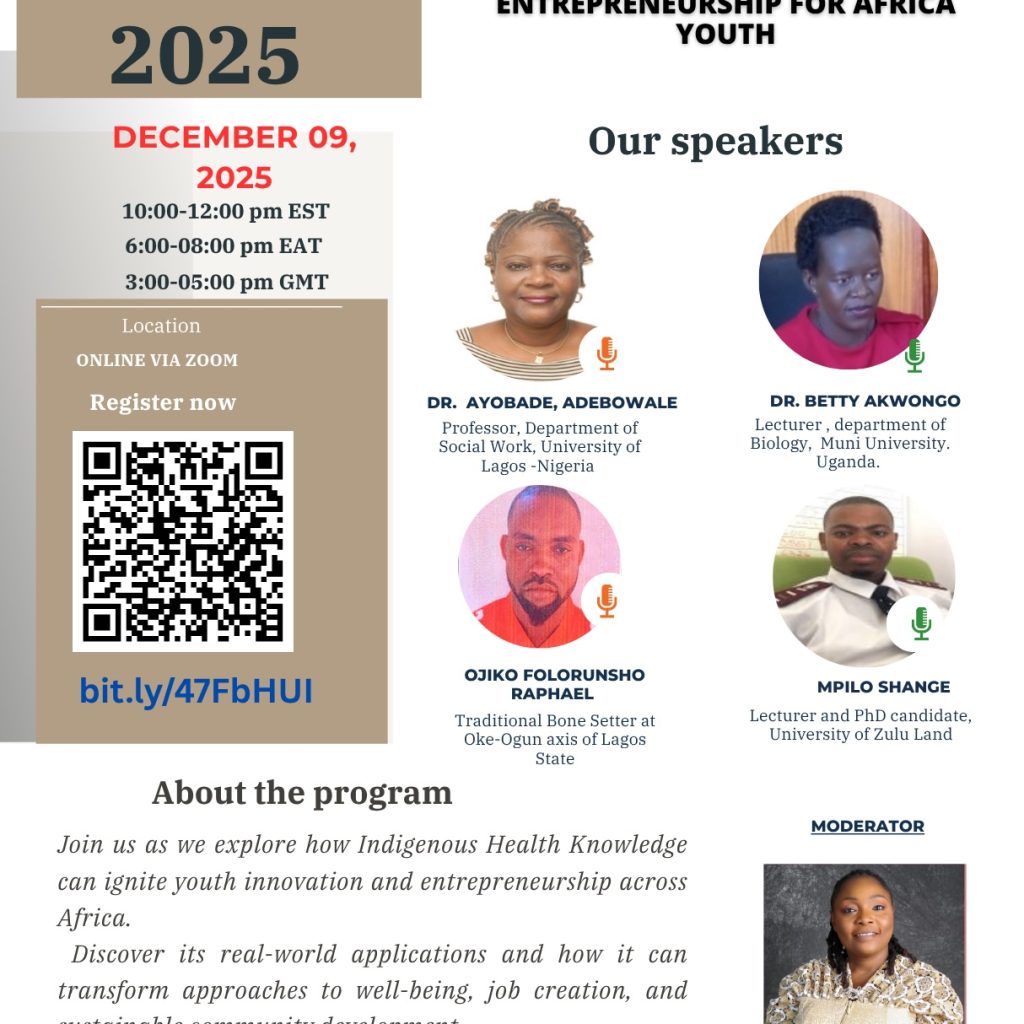
Indigenous Health and Well being: Opportunities for Jobs and Entrepreneurship for African Youth The Africa Indigenous Knowledge Research Network (AIKRN) and the Institute of African Studies (IAS) at Carleton University invite you to join the upcoming AIKRN Quarterly Webinar on “Indigenous Health  and Wellbeing: Opportunities for Jobs and Entrepreneurship for African Youth.” Across Africa, Indigenous health systems rooted in traditional medicine, natural healing practices, community care, and spirituality have sustained generations. Today, these systems continue to offer affordable, culturally grounded, and sustainable healthcare solutions—especially in rural areas. Yet, much of this Indigenous knowledge remains undervalued, under-documented, and disconnected from contemporary entrepreneurship and innovation ecosystems. With youth unemployment hovering around 12% across the continent, the time is ripe to bridge ancestral wisdom with youth-led innovation and enterprise to build resilient, inclusive, and sustainable economies. This engaging two-hour webinar will convene scholars, practitioners, policymakers, and young entrepreneurs to explore how Indigenous health knowledge can serve as a powerful foundation for innovation, job creation, and sustainable development in Africa. Read more @Carleton University

Akwete: Weaving Heritage, Empowering Generations Read More »

Indigenous Health and Well being: Opportunities for Jobs and Entrepreneurship for African Youth

Indigenous Health and Well being: Opportunities for Jobs and Entrepreneurship for African Youth The Africa Indigenous Knowledge Research Network (AIKRN) and the Institute of African Studies (IAS) at Carleton University invite you to join the upcoming AIKRN Quarterly Webinar on “Indigenous Health  and Wellbeing: Opportunities for Jobs and Entrepreneurship for African Youth.” Across Africa, Indigenous health systems rooted in traditional medicine, natural healing practices, community care, and spirituality have sustained generations. Today, these systems continue to offer affordable, culturally grounded, and sustainable healthcare solutions—especially in rural areas. Yet, much of this Indigenous knowledge remains undervalued, under-documented, and disconnected from contemporary entrepreneurship and innovation ecosystems. With youth unemployment hovering around 12% across the continent, the time is ripe to bridge ancestral wisdom with youth-led innovation and enterprise to build resilient, inclusive, and sustainable economies. This engaging two-hour webinar will convene scholars, practitioners, policymakers, and young entrepreneurs to explore how Indigenous health knowledge can serve as a powerful foundation for innovation, job creation, and sustainable development in Africa. Read more @Carleton University

Indigenous Health and Well being: Opportunities for Jobs and Entrepreneurship for African Youth Read More »

Carleton University & University of Zululand Sign MOU to Advance AIKRN Project

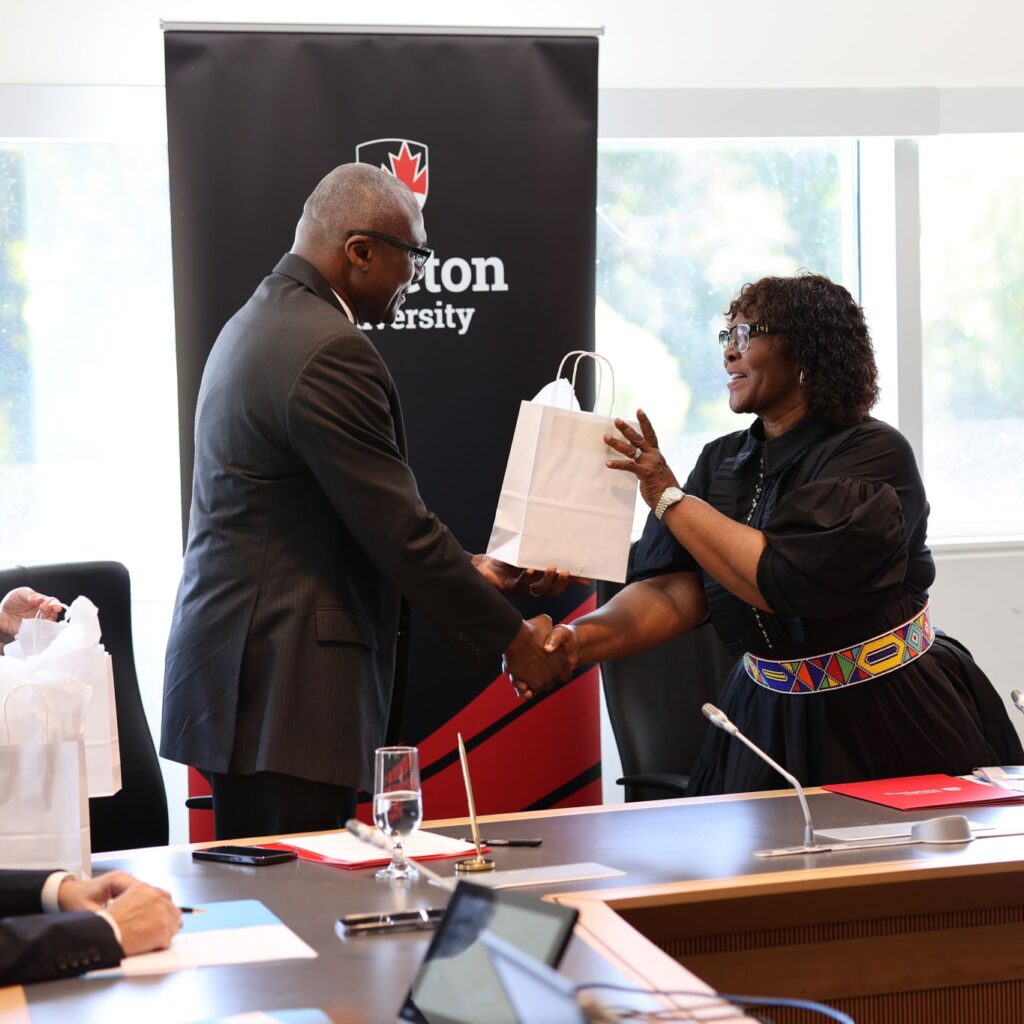
Carleton University & University of Zululand Sign MOU to Advance AIKRN Project Carleton University proudly welcomed an esteemed delegation from the University of Zululand to Ottawa on 5th september 2025 for the official signing of a Memorandum of Understanding (MOU). The partnership strengthens collaborative efforts on the African Indigenous Knowledge Research Network (AIKRN), a groundbreaking project dedicated to developing sustainable solutions for employment and entrepreneurship for African youth. The signing ceremony was hosted by Carleton University President, Prof. Wisdom Tettey, alongside members of the Carleton University community. Representing the University of Zululand was Prof. Xoliswa Mtose, Vice-Chancellor, accompanied by senior leaders: Nontokozo Mashiya – Director, Vice-Chancellor’s Office (Internationalization) Khoboso Lehloenya – Dean, Faculty of Science, Agriculture & Engineering Dr. Inocent Moyo – Deputy Dean, Research & Internationalization This MOU marks a significant milestone in AIKRN’s mission, led by Prof. Samuel Ojo Oloruntoba, to harness African Indigenous knowledge as a tool for innovation, economic growth, and youth empowerment. “This partnership reflects our continued engagement with South Africa as a key partner and highlights our shared commitment to advancing decolonization research in Africa and beyond,” said Prof. Tettey during the ceremony. Through this collaboration, Carleton University and the University of Zululand will work together to: Support AIKRN’s research initiatives focused on African Indigenous knowledge systems. Develop programs aimed at addressing youth unemployment and fostering entrepreneurship. Enhance academic and cultural exchanges between Canadian and South African institutions. The event signifies a renewed dedication to building sustainable academic partnerships and strengthening global research networks aimed at empowering Africa’s next generation of innovators. 🔗 Learn more about AIKRN: https://www.linkedin.com/company/106625330/

Carleton University & University of Zululand Sign MOU to Advance AIKRN Project Read More »

Sankofa: Storying as method and analysis across indigenous cultures

Sankofa: Storying as method and analysis across indigenous cultures Sankofa: Storying as method and analysis across indigenous cultures Edited Book proposal under review for possible publication with Routledge Editors: Araba A. Z. Osei-Tutu aazosei-tutu@ug.edu.gh, Alankrita Chhikara achhikar@purdue.edu, and Jake Burdick burdics@purdue.edu Brief Description and Rationale Until the lions have their storytellers, the story of the hunt will always glorify the hunter (African Proverb) Every culture has stories that they tell- stories about animals and fables, stories about family and migration/immigration, stories about trauma, about fears, morals and values, histories, and fiction. However, over centuries, colonialism has been instrumental in adulterating, and in some cases erasing the stories of many indigenous cultures, sometimes in an attempt to obscure colonial violence (Chatterjee, 1993; Cox, 2012; Dirks, 2001; Olney, 2015, Spivak, 1988). In Africa, for example, many cultural norms, stories, beliefs, and worldviews were touted as barbaric or demonic, with languages indigenous to the continent lost or endangered (Masaeli, 2021; Onwubie, 2016). In like manner, stories, and worldviews of indigenous, (Native peoples across the globe), Latina/o, and Asia, have either been marginalized, discounted with the colonial narratives dominating (Nakhid, 2021: Osei-Tutu, 2021). Particularly within the academy and research spaces, such indigenous ways of knowing, knowledge sharing and theorizing are ignored, illegitimized, or assessed as not rigorous (Chilisa, 2017; Patel, 2015; Osei-Tutu, 2022). By this rhetoric, many indigenous peoples’ cultures, ways of knowing and sharing knowledge, as well as theorizing, have been forced to the peripherals of western lenses and methodologies. To address this issue and as a form of resistance, many indigenous peoples (indigenous used here refers to Native peoples, Africans, Latino/a, Caribbean and South-Asian origins) through decolonial lenses and actions, have taken up spaces where their stories and ways of knowing and sharing knowledge are centralized. Understanding the role that stories play in such cultures, it is problematic to see that even in spaces like narrative inquiry, indigenous ways of storying are not legitimized unless they are discussed through extant literature – without which it is considered mere stories and not analysis (Osei-Tutu, 2021; 2022). This edited book is a journey to make visible multiple ways of being academic, particularly when we center indigenous voices towards decolonization. As a mode of critique, we offer multiple examples of storytelling that have been informed, shaped, and birthed by and in cultural knowledge and meanings that depart from the totalizing force of western hegemony as it amplifies decolonial discourses through praxis. These examples stand as instances of resistance by virtue of their very existence in the world in what we are terming polytextual evidence as critique. This book is a practical response to the need to take a retrospective look at epistemologies, axiologies and meanings that marginalized peoples in academia possess through their cultural and linguistic heritage. It is the megaphone that sounds through illustrating what is possible when indigenous peoples bring cultural and linguistic understanding to their experiences, hence the adoption of the Akan philosophical concept of Sankofa. Sankofa translates literally as “go back and get it”. It is represented by a bird with its head turned backwards, feet facing forward, carrying an egg. It symbolizes reaching back to the past to reclaim knowledge that will pave way for new paths in the present and future (OseiTutu, 2021, 2022). Therefore, the concept of Sankofa as reflected in the title of this book is symbolic of how retrieving, re-visiting, re-centering and re-knowing through storying indigenously can provide alternative methodological avenues for researchers. To bring understanding to the story we set out to tell in this edited book, we take a break to discuss the abakoasɛm1 of storytelling across the indigenous peoples whose methods and analysis are shared in this book beginning with the theoretical foundations. Intersection between Decolonial Theory and Methodology “The cognitive empire is that form of imperialism which invades the mental universe of its victims, in the process imposing particular knowledge systems, displacing others and consequently shaping the intellectual consciousness of its victims.” (Ndlovu-Gatsheni, 2021, n.p.) Imperialism poses a complex challenge for epistemology, particularly when indigenous epistemologies are concerned. This form of coloniality embedded in research and knowledge sharing has resulted in many calls for decolonization; the call for centering African knowledge systems (the philosophical, theoretical, conceptual and methodological thinking from Africa) in learning, teaching, research, and community service (Bekele et al., 2023b; Bekele, 2024; Chilisa, 2017); the decolonization of research methods (Smith, 2012); resisting the cognitive empire (Ndlovu-Gatsheni, 2019) and “similar ideas expressed by other African scholars and writers, such Ngũgĩ wa Thiong’o’s “metaphysical empire’ and ‘colonization of the mind,’ V.Y. Mudmbe’s ‘colonial library,’ Robert Gildea’s ‘empire of the mind,’ Ashis Nandy’s ‘intimate empire/ intimate enemy’ and Aníbal Quijano’s ‘coloniality of power’ and the work of other Latin American scholars on the coloniality of knowledge” (McInerny, 2021). In centering narrative as a methodology 1 History informed by decolonial theory /euro western push back activist route, this edited book adopts and adapts Ndlovu-Gatsheni’s (2019) conceptualization of decolonization; Besides identifying modernity/colonialism as the fundamental problem, decolonization/decoloniality challenges the present globalization and its pretensions of universalism, which hides the reality of the Europeanization and Americanization of the modern world. While colonialism and imperialism embarked on an aggressive destruction of existing diverse worlds, they were also equally aggressive in denying common humanity as they invented and created all sorts of pseudo-scientific discourses to divide people racially across the planet and notions of stages of developmentalism to push other human beings below the invented “human line” (Fanon Wretched), (p. 203). In that spirit of challenging globalization, Europeanization and Americanization in research methods and sharing, this edited book posits that utilizing indigenous theoretical frameworks and philosophies inform the development of indigenous research methodologies (Love, 2019; Osei-Tutu, 2022), thus engendering the sharing and place of indigenous epistemology in organizational [identifying organization in context of this work as academia] research (Ruwhiu & Cone, 2010). Therefore, as “a much more profound activity and process than simply obtaining political independence; [Sankofa: Storying as method and analysis across indigenous cultures] … is

Sankofa: Storying as method and analysis across indigenous cultures Read More »

Africa Indigenous Knowledge Research Network (AIKRN) QUARTERLY WEBINAR SERIES

Africa Indigenous Knowledge Research Network (AIKRN) QUARTERLY WEBINAR SERIES Across Africa, indigenous knowledge systems (IKS) have long served as the foundation for resilience, innovation, and socio-economic survival. From traditional medicine and craft industries to food systems and local environmental management, indigenous knowledge is deeply rooted in the wisdom, culture and norms of the people. It is rooted in community life and offers tremendous untapped potential for entrepreneurship and inclusive economic growth. Africa’s youth—who make up over 60% of the continent’s population face the perennial  urgent challenges around unemployment, underemployment, and limited access to dignified economic opportunities. In this webinar, speakers will explore how the  intersection of indigenous knowledge and entrepreneurship offers a promising pathway for business development, youth empowerment, and sustainable livelihoods, especially when scaled and supported with enabling policies, finance, and innovation ecosystems. This webinar aims to foster dialogue, share insights, and showcase success stories and innovations that demonstrate how youth in Africa are transforming indigenous knowledge into scalable business ventures. It also seeks to examine how academic institutions, policymakers, private sector actors, and development organizations can collaborate to amplify these efforts and create an ecosystem for sustainable indigenous entrepreneurship. LEARN MORE REGISTER NOW

Africa Indigenous Knowledge Research Network (AIKRN) QUARTERLY WEBINAR SERIES Read More »

FELLOWSHIP PROGRAMMES

FELLOWSHIP PROGRAMMES Our Fellowship Programmes open the door to in-depth learning and practical experience within the United Nations human rights system. They are designed for individuals and professionals passionate about advancing human rights—whether they are civil society members, indigenous leaders, minority rights defenders, or staff of national human rights institutions. Through these programmes, fellows gain direct exposure to UN processes, receive specialized training, and develop the skills needed to advocate effectively for human rights in their communities and on the global stage. Each fellowship focuses on a specific area—ranging from indigenous peoples’ rights to minority protection, African descent empowerment, humanitarian assistance, and institutional capacity building. Participants benefit from expert-led sessions, networking opportunities, and firsthand experience in Geneva, Strasbourg, and other international hubs. Graduates return equipped with enhanced knowledge, practical tools, and stronger connections to the international human rights movement. Learn more about OHCHR Fellowship Programmes ›

FELLOWSHIP PROGRAMMES Read More »

12 Prestigious Scholarships You Should Consider Applying For

12 Prestigious Scholarships You Should Consider Applying For Are you looking to study abroad on a fully funded scholarship? Here are 12 competitive international scholarships that offer financial support, tuition coverage, and more for students worldwide. Explore each opportunity and apply to the one that fits your academic and career goals: 1. DAAD Scholarship – Germany For graduates, doctoral candidates, and postdocs interested in studying or researching in Germany. 2. Chevening Scholarships – United Kingdom Fully funded master’s scholarships for future global leaders to study in the UK. 3. Fulbright Foreign Student Program – USA Enables graduate students, young professionals, and artists from abroad to study and conduct research in the United States. 4. Australian Government Research Training Program (RTP) Supports both domestic and international students undertaking research doctorate and master’s degrees in Australia. 5. MEXT Scholarship – Japan Offered by the Japanese government for undergraduate, graduate, and research-level studies. 6. Chinese Government Scholarship (CSC) Fully funded scholarships for international students to study in Chinese universities. 7. Türkiye Bursları Scholarships – Turkey Government-funded scholarship programs for international students at all levels of study. 8. Thailand Government Scholarships Scholarships for international students to study postgraduate programs in Thailand. 9. Gates Cambridge Scholarships – UK Highly competitive scholarships for outstanding applicants from outside the UK to pursue a full-time postgraduate degree at the University of Cambridge. 10. Hungarian Government Scholarships (Stipendium Hungaricum) Fully funded scholarships for international students at Hungarian universities. 11. Italian Government Scholarships Support international students wishing to pursue study, training, or research programs at Italian institutions. 12. Eiffel Scholarships – France A prestigious French government scholarship for international students at the master’s and PhD levels.

12 Prestigious Scholarships You Should Consider Applying For Read More »

AIKRN Goes Live on Channels TV

AIKRN Goes Live on Channels TV We’re thrilled to share that Professor Samuel Ojo Oloruntoba and Scorah Tumwebaze, key voices in the Africa Indigenous Knowledge Research Network (AIKRN), were recently featured on Channels Television, Nigeria’s leading 24-hour news network! This exciting moment shines a spotlight on the vital work AIKRN is doing to advance Indigenous knowledge systems across Africa. Their appearance highlights our growing impact and the importance of our mission in shaping sustainable and culturally rooted development.  Watch the interview here: Click to watch Jump to: -3:38:57

AIKRN Goes Live on Channels TV Read More »

Shopping Cart
Scroll to Top