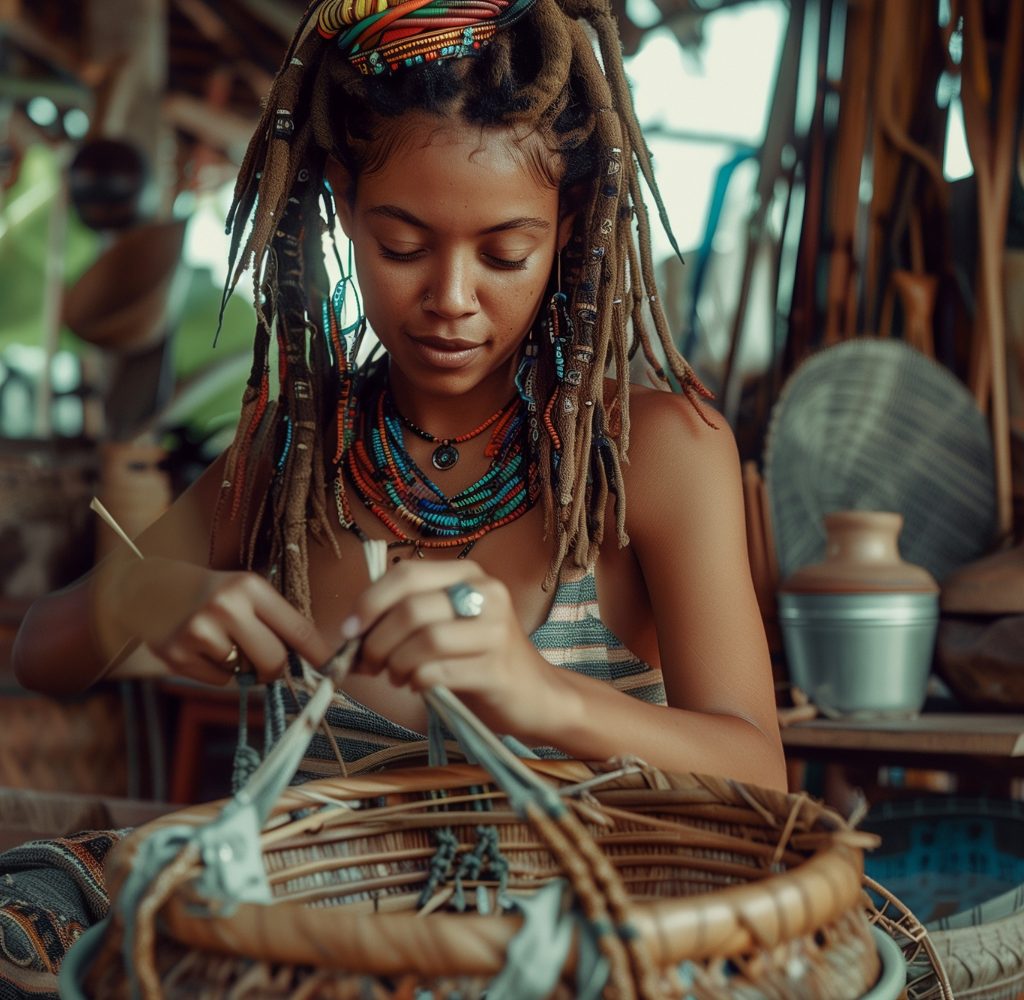
Weaving Indigenous Knowledge into Opportunity to Empower Batwa Female Youth By Florence M. Asiimwe, J.M. Kanyamurwa, Josephine Nantege, & Schorah Tumwebaze In Uganda’s forested highlands, Batwa female youth embody deep ecological knowledge, vibrant art, and ancestral resilience. However, their potential is often overlooked in mainstream development stories. This blog examines how Indigenous knowledge, frequently ignored by colonial and economic forces, can be revitalized as a foundation for gender-sensitive entrepreneurship and cultural renewal. Blending heritage with innovation, Batwa female youth are transforming storytelling, agroecology, and craftsmanship into tools for economic empowerment and social recognition. Their story offers a powerful model for justice-driven enterprise, one that honors tradition while promoting inclusion, visibility, and sustainable livelihoods. More than just a story of empowerment, it represents a movement where cultural identity becomes a source of economic strength, with Batwa female youth leading through wisdom, creativity, and purpose. This blog combines insights from field stories and data across diverse but interconnected themes, illustrating how dignity, success, knowledge, and entrepreneurship come together to uplift Batwa female youth and reshape development.From Cultural Heritage to Economic EmpowermentIn the valleys of Kisoro and Rubanda districts, where ancestral traditions intersect with modern challenges, something significant is unfolding. Here, amid mist-covered ridges and ancestral echoes, a movement is taking shape, one that reclaims Indigenous knowledge not as outdated relics but as active tools for economic empowerment and cultural revival. Historically excluded by conservation policies that disconnected them from land and livelihoods, Batwa communities have faced systemic marginalization and economic instability. However, Batwa female youth are now reimagining ancestral knowledge as vibrant resources, turning herbal medicine, sustainable farming, handcrafted goods, beekeeping products, and culinary traditions into respectful enterprises. The Batwa youth entrepreneurs go beyond mere survival; they actively reshape their identity, independence, and intergenerational ties. Led by organizations such as the Africa Indigenous Knowledge Research Network (AIKRN) and supported by the Mastercard Foundation, this project highlights Indigenous Knowledge Systems (IKS) as sustainable and restorative alternatives to exploitative capitalist models. The values of reciprocity, ecological care, and community well-being underpin local entrepreneurial efforts. In this context, Batwa female youth’s businesses serve as symbols of resistance and renewal. Reclaiming Dignity: What Signifies Dignified and Fulfilling Work for Indigenous African Youth?For Batwa female youth, the concept of dignified labor extends beyond earning a living; it embodies a profound connection to self-determination, cultural identity, and community support. In the lush Batwa villages of Birara and Kinyarushengye, young women view work as a moral and spiritual calling, one that must “honor our traditions, serve our people, promote our identity and liberate us from dependency.” Roles that have traditionally held both symbolic and economic significance, such as herbal healing and oral storytelling, are being reassessed as entrepreneurial opportunities that strengthen identity while generating income. These roles are about more than money; they are expressions of identity in a world that has long overlooked Indigenous youth. As one herbalist passionately declared, “My medicine heals bodies and spirits, it is my inheritance and my future,” revealing how ancestral transmission becomes a pathway for dignity and social recognition. This ethos aligns with African Indigenous philosophies, where labor is deeply connected to purpose, relationships, and cosmology. The revival of Batwa farming practices, rooted in seed sovereignty and ecological wisdom, exemplifies this respectful approach, as girls grow resilient crops that nurture both body and spirit. Similarly, beadwork and crafts serve not only as aesthetic expressions but also as memory tools, with each artifact acting as a tangible record of ancestral memory and cultural pride.Batwa female youth see success as a multifaceted concept that highlights cultural integrity, relational responsibility, and personal fulfillment, rather than material wealth. Unlike Western ideas of success, they believe it’s about caring for family, passing on knowledge, and reclaiming agency while preserving their Indigenous identity. One girl said, “If I can feed my siblings, teach my craft, and be respected, I am successful,” which highlights the importance of community care and spiritual harmony. Success is often linked to ancestral approval and cultural preservation, with girls describing their work as “watched by the spirits” and “guided by the ancestors.” These spiritual elements show a worldview where achievement is relational, cyclical, and grounded in cosmological ethics. Education is seen as a community-based way of learning, with girls acting as protectors and carriers of Indigenous knowledge through informal education. “This is our university,” said a peer educator, framing learning as a daily part of life and intergenerational guidance. When market success is achieved, it’s celebrated not just for profit, but for its role in preserving culture; each sale is a conversation, and each product is a vessel of meaning. In this way, success weaves a fabric of resilience, reciprocity, and reverence.How Indigenous Knowledge Transforms Marginal CommunitiesThe strategic mobilization of Indigenous knowledge by Batwa female youth is more than just a survival tactic; it is a powerful way to redefine marginality into agency and turn exclusion into innovation. By transforming IKS into small businesses, these girls are not only building their economic presence but also reclaiming epistemic legitimacy within Uganda’s development narrative. Herbalists, for example, are turning ancestral remedies into marketable products that link traditional healing with modern wellness, positioning themselves as guardians of both health and heritage. Culinary artisans are reviving Indigenous foodways, such as millet porridge, wild mushrooms, and native greens, not out of nostalgia, but as nutritional solutions and tools for cultural education. “We don’t just feed people, we teach them,” one girl remarked, highlighting how food becomes a medium of education and empowerment. The commodification of Indigenous knowledge, when ethically governed and community-owned, becomes a mechanism for intergenerational investment and socio-economic resilience. Craft groups, too, serve as centers of cultural storytelling and economic unity, each stitch or wood carving a testament to survival, each motif a declaration of presence. In this context, Indigenous knowledge is not peripheral; it is central to reimagining development, restoring dignity, and cultivating futures rooted in justice and cultural continuity.Empowerment rooted in Indigenous knowledge is not just a footnote to development; it signifies a fundamental