News

The Transformative Power of African Knowledge

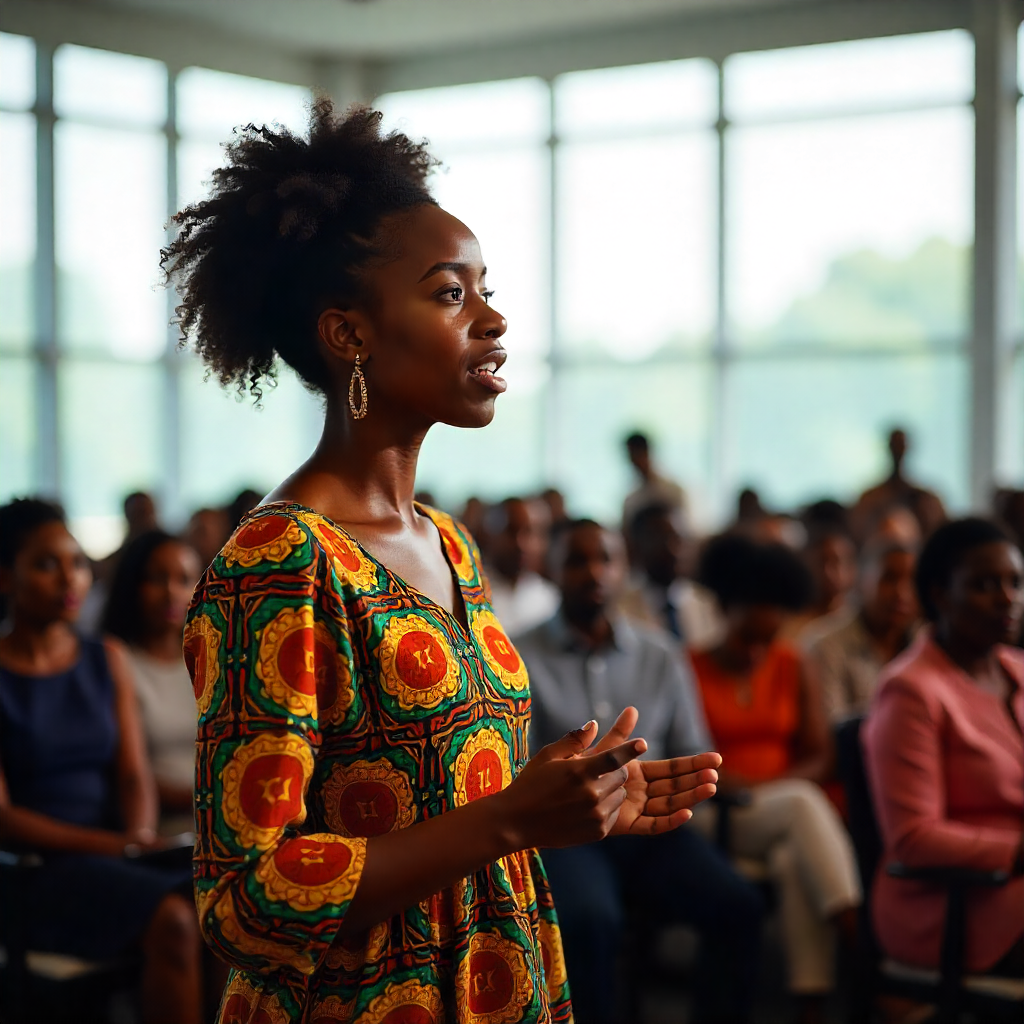
Highlighting the Transformative Power of African Indigenous Knowledge Highlighting the Transformative Power of African Indigenous KnowledgeAt a time when many of society’s greatest challenges—climate change, biodiversity loss, food insecurity, health disparities demand holistic approaches, African Indigenous Knowledge Systems (AIKS) offer rich and time-tested wisdom. These systems, though often unwritten, have shaped livelihoods, social structures, environmental practices, and belief systems for generations.Carleton University has taken a bold step with its new formal partnership (MOU signed Sept. 3, 2025) with South Africa’s University of Zululand. Led by Carleton’s Institute of African Studies and the African Indigenous Knowledge Research Network (AIKRN), this collaboration aims to go beyond research for its own sake. Key goals include:• Developing sustainable employment and entrepreneurship pathways for youth in African communities;• Merging traditional knowledge with technological innovation and global scientific ideas;• Strengthening cross-cultural learning—especially on reconciliation and decolonization;• Embedding African thought more deeply in academic curricula and research output.The initiative also puts priority on working with communities, respecting indigenous practices, and ensuring that the production of knowledge is equitable and inclusive. The University of Zululand, with its large student body and diverse programs, is embracing its role as a node for “African thought.”This is more than an academic collaboration—it is a movement toward recognizing that sustainable solutions must draw on multiple ways of knowing. For more on this important partnership and its potential global impact, read the full piece on Carleton Newsroom.

The Transformative Power of African Knowledge Read More »

Carleton University & University of Zululand Sign MOU to Advance AIKRN Project

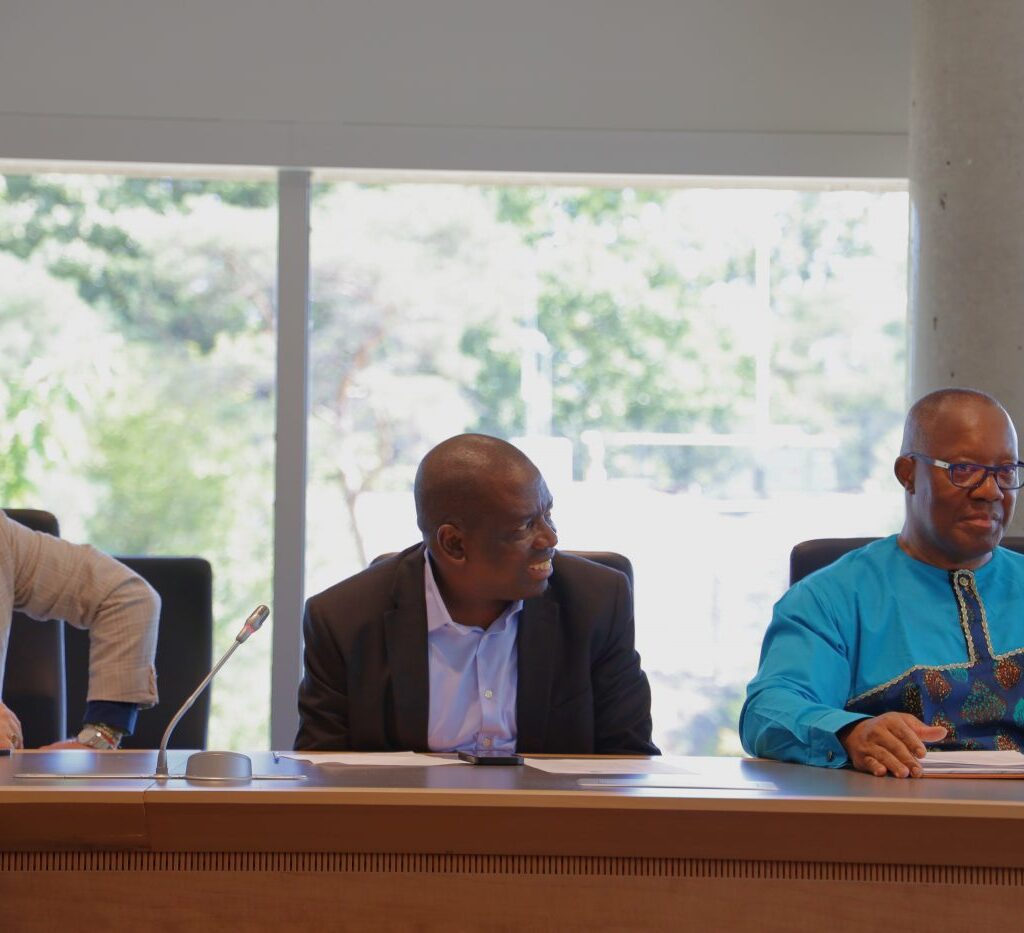
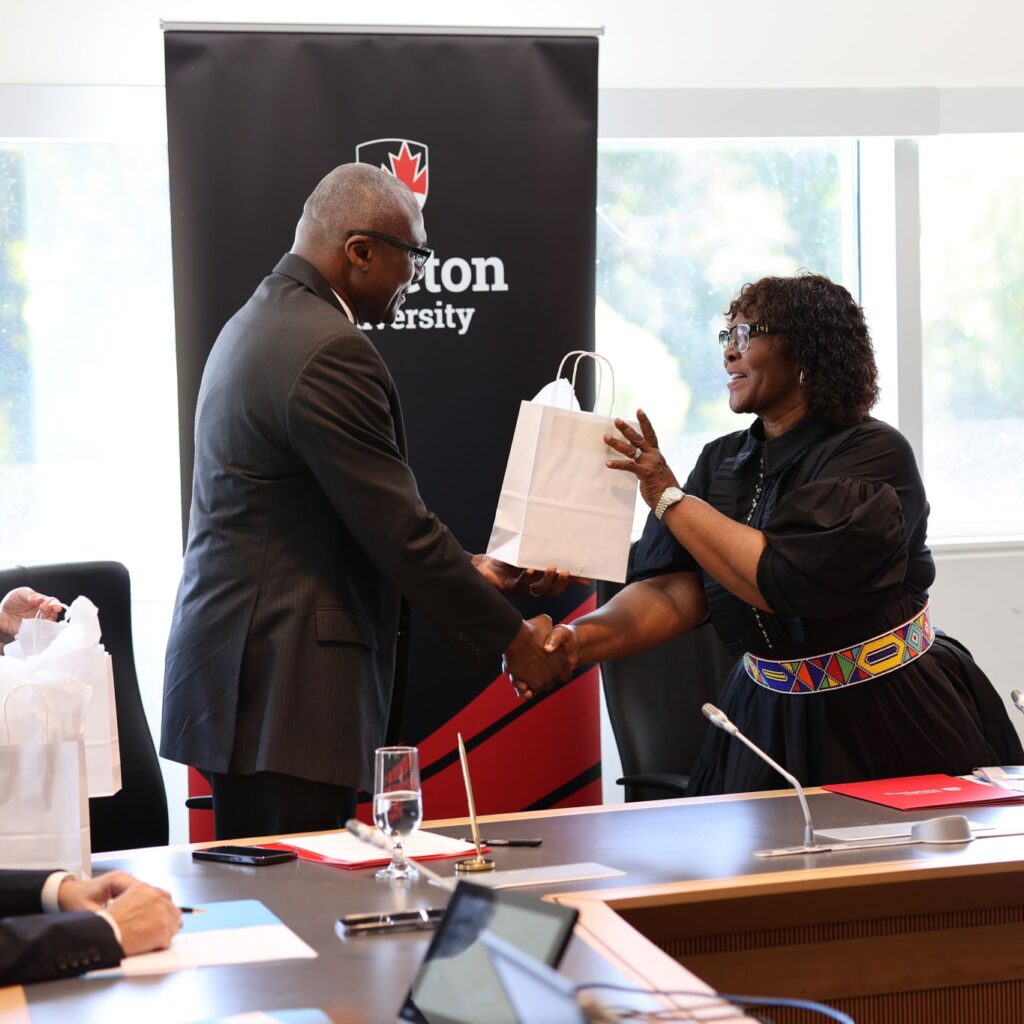
Carleton University & University of Zululand Sign MOU to Advance AIKRN Project Carleton University proudly welcomed an esteemed delegation from the University of Zululand to Ottawa on 5th september 2025 for the official signing of a Memorandum of Understanding (MOU). The partnership strengthens collaborative efforts on the African Indigenous Knowledge Research Network (AIKRN), a groundbreaking project dedicated to developing sustainable solutions for employment and entrepreneurship for African youth. The signing ceremony was hosted by Carleton University President, Prof. Wisdom Tettey, alongside members of the Carleton University community. Representing the University of Zululand was Prof. Xoliswa Mtose, Vice-Chancellor, accompanied by senior leaders: Nontokozo Mashiya – Director, Vice-Chancellor’s Office (Internationalization) Khoboso Lehloenya – Dean, Faculty of Science, Agriculture & Engineering Dr. Inocent Moyo – Deputy Dean, Research & Internationalization This MOU marks a significant milestone in AIKRN’s mission, led by Prof. Samuel Ojo Oloruntoba, to harness African Indigenous knowledge as a tool for innovation, economic growth, and youth empowerment. “This partnership reflects our continued engagement with South Africa as a key partner and highlights our shared commitment to advancing decolonization research in Africa and beyond,” said Prof. Tettey during the ceremony. Through this collaboration, Carleton University and the University of Zululand will work together to: Support AIKRN’s research initiatives focused on African Indigenous knowledge systems. Develop programs aimed at addressing youth unemployment and fostering entrepreneurship. Enhance academic and cultural exchanges between Canadian and South African institutions. The event signifies a renewed dedication to building sustainable academic partnerships and strengthening global research networks aimed at empowering Africa’s next generation of innovators. 🔗 Learn more about AIKRN: https://www.linkedin.com/company/106625330/

Carleton University & University of Zululand Sign MOU to Advance AIKRN Project Read More »

Africa Indigenous Knowledge Research Network (AIKRN) QUARTERLY WEBINAR SERIES

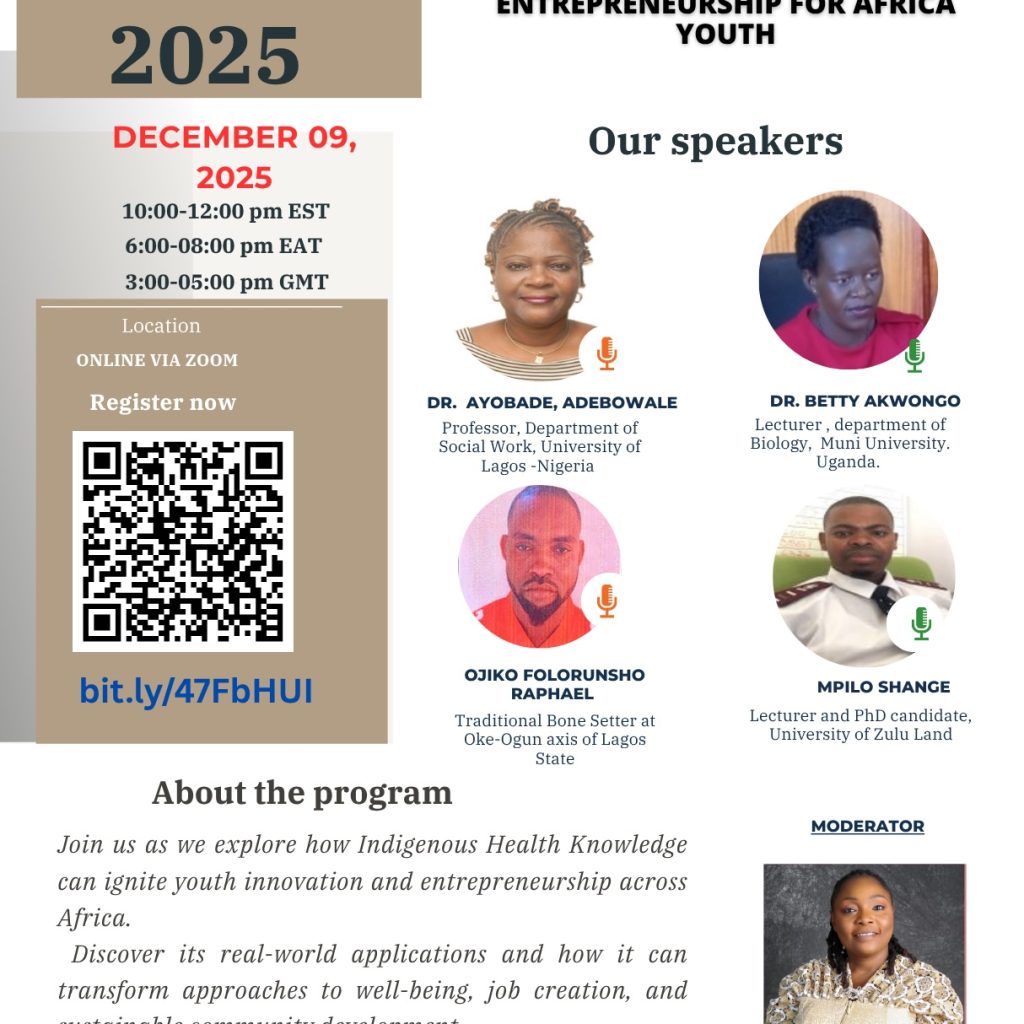
Africa Indigenous Knowledge Research Network (AIKRN) QUARTERLY WEBINAR SERIES Across Africa, indigenous knowledge systems (IKS) have long served as the foundation for resilience, innovation, and socio-economic survival. From traditional medicine and craft industries to food systems and local environmental management, indigenous knowledge is deeply rooted in the wisdom, culture and norms of the people. It is rooted in community life and offers tremendous untapped potential for entrepreneurship and inclusive economic growth. Africa’s youth—who make up over 60% of the continent’s population face the perennial  urgent challenges around unemployment, underemployment, and limited access to dignified economic opportunities. In this webinar, speakers will explore how the  intersection of indigenous knowledge and entrepreneurship offers a promising pathway for business development, youth empowerment, and sustainable livelihoods, especially when scaled and supported with enabling policies, finance, and innovation ecosystems. This webinar aims to foster dialogue, share insights, and showcase success stories and innovations that demonstrate how youth in Africa are transforming indigenous knowledge into scalable business ventures. It also seeks to examine how academic institutions, policymakers, private sector actors, and development organizations can collaborate to amplify these efforts and create an ecosystem for sustainable indigenous entrepreneurship. LEARN MORE REGISTER NOW

Africa Indigenous Knowledge Research Network (AIKRN) QUARTERLY WEBINAR SERIES Read More »

AIKRN 2nd Annual Conference Heads to Regina in 2026

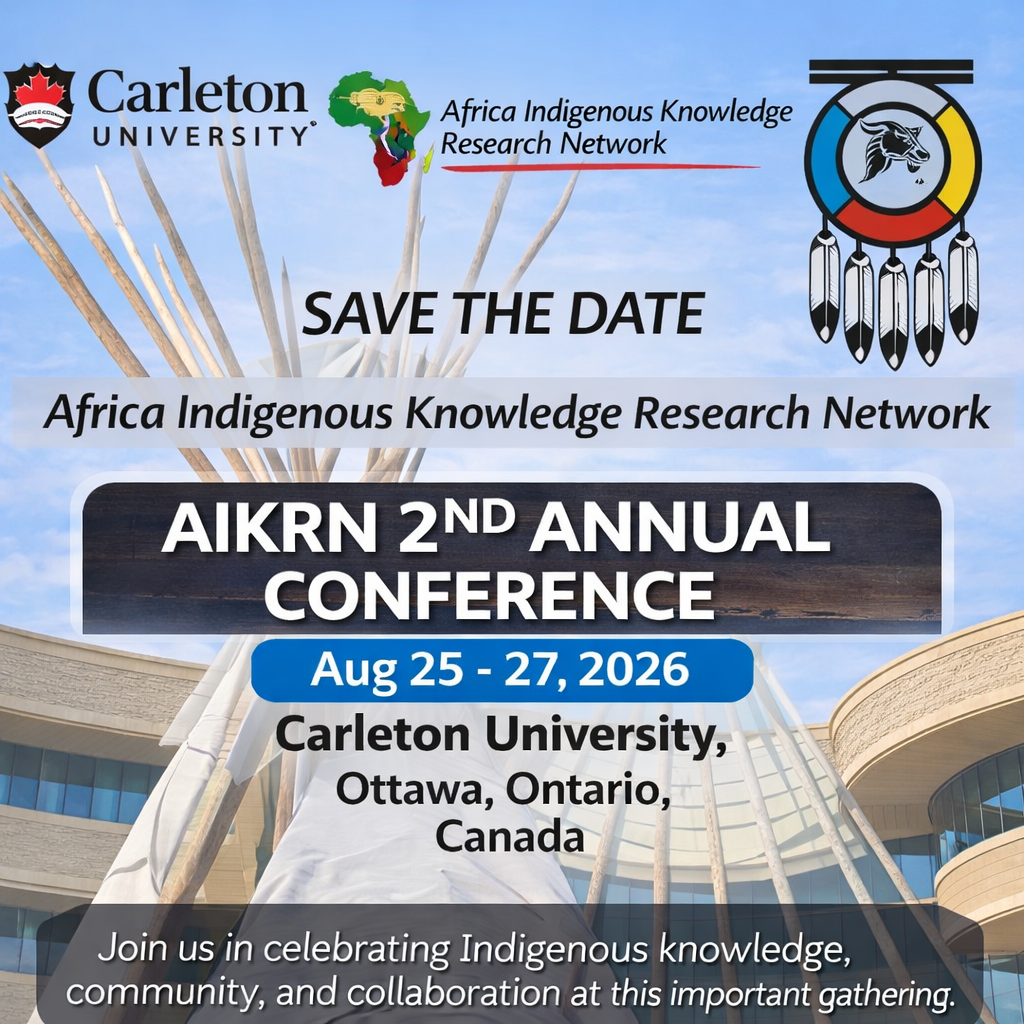
AIKRN 2nd Annual Conference Heads to Regina in 2026 The Africa Indigenous Knowledges Research Network (AIKRN) is thrilled to announce its 2nd Annual Conference, taking place from June 16 to 18, 2026, in Regina, Saskatchewan. This landmark event will bring together scholars, practitioners, Indigenous knowledge holders, and youth from across Africa, Canada, and beyond to engage with the theme of “Reclaiming, Revitalizing, and Re-Centering Indigenous Knowledges.” Through keynote presentations, panel discussions, and interactive workshops, participants will explore cutting-edge approaches for preserving, promoting, and mobilizing Indigenous knowledge systems in contemporary contexts. When: June 16–18, 2026Where: Regina, Saskatchewan The conference promises to foster cross-cultural dialogue, international collaboration, and youth leadership in Indigenous knowledge research and innovation. Registration details, travel supports, and the full program will be announced in the coming months. For further information or inquiries, please contact:✉️ AIKRN2026@fnuniv.ca

AIKRN 2nd Annual Conference Heads to Regina in 2026 Read More »

AIKRN Goes Live on Channels TV

AIKRN Goes Live on Channels TV We’re thrilled to share that Professor Samuel Ojo Oloruntoba and Scorah Tumwebaze, key voices in the Africa Indigenous Knowledge Research Network (AIKRN), were recently featured on Channels Television, Nigeria’s leading 24-hour news network! This exciting moment shines a spotlight on the vital work AIKRN is doing to advance Indigenous knowledge systems across Africa. Their appearance highlights our growing impact and the importance of our mission in shaping sustainable and culturally rooted development.  Watch the interview here: Click to watch Jump to: -3:38:57

AIKRN Goes Live on Channels TV Read More »

AIKRN to Host June 2025 Webinar on NGOs and Indigenous Knowledge Promotion

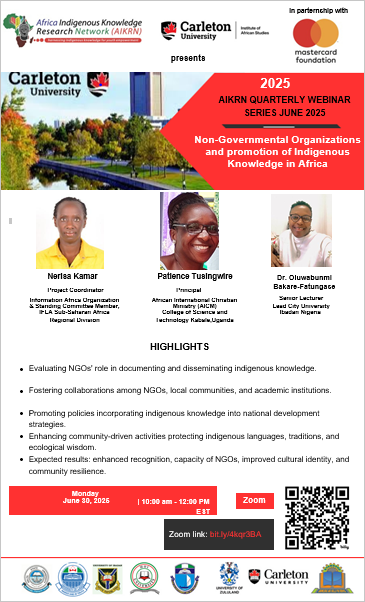
AIKRN to Host June 2025 Webinar on NGOs and Indigenous Knowledge Promotion The Africa Indigenous Knowledge Research Network (AIKRN) is pleased to announce its upcoming Quarterly Webinar Series, scheduled for Monday, June 30, 2025, from 10:00 AM to 12:00 PM EST. This important event will spotlight the role of Non-Governmental Organizations (NGOs) in advancing and preserving Indigenous Knowledge across the African continent. Under the theme:“Non-Governmental Organizations and the Promotion of Indigenous Knowledge in Africa,”the webinar will bring together experts, researchers, and practitioners to explore the contributions of NGOs in: Documenting and disseminating African Indigenous Knowledge; Building collaborations between NGOs, local communities, and academic institutions; Influencing policy frameworks to integrate Indigenous Knowledge into national development strategies; Supporting grassroots initiatives that protect Indigenous languages, traditions, and ecological knowledge. The event will feature prominent speakers, including: Dr. Oluwabunmi Bakare-Fatungase – Project Coordinator Nerisa Kamar – Lead City University, Ibadan, Nigeria Patience Tusingwire – Information Africa Organization & IFLA Sub-Saharan Africa Standing Committee Principal, AICM College of Science and Technology, Kabale, Uganda The webinar aims to strengthen community-driven efforts, enhance cultural identity, and improve NGO capacity in supporting Indigenous knowledge systems. 🔗 Zoom Link: bit.ly/4kqr3BA This webinar is part of AIKRN’s ongoing efforts to promote African-centered approaches to knowledge, development, and sustainability. All interested individuals, organizations, and community stakeholders are encouraged to attend.

AIKRN to Host June 2025 Webinar on NGOs and Indigenous Knowledge Promotion Read More »

Introducing Our New Youth Forum: A Platform for Indigenous Innovation and Empowerment

Introducing Our New Youth Forum: A Platform for Indigenous Innovation and Empowerment We are excited to announce the official addition of the AIKRN Youth Forum to our website — a dynamic new space dedicated to amplifying the voices and innovations of Indigenous youth across Africa. The Youth Forum envisions a continent where young people reclaim, transform, and lead with African Indigenous Knowledge. It aims to mobilize 20,000 Indigenous young women and men to co-create knowledge-led enterprises, promote cultural identity, and build solutions for inclusive and ecological development. With a strong leadership team and a mission rooted in research, advocacy, and intergenerational dialogue, the Forum serves as a platform for youth-led research, mentorship, entrepreneurship, and collaboration. It connects youth with experienced researchers to foster indigenous innovation and create access to dignified jobs. Explore the Youth Forum now and meet the passionate leaders shaping Africa’s knowledge revolution

Introducing Our New Youth Forum: A Platform for Indigenous Innovation and Empowerment Read More »

Fourth World Journal: Call for Papers January 2026 and June 2026​

Fourth World Journal: Call for Papers January 2026 and June 2026 Fourth World Journal: Call for Papers January 2026 and June 2026 Founded in 1984, The Fourth World Journal (SSN: 1090-5251) is a publication of the Center for World Indigenous Studies, an Indigenous-directed 501 (c) 3, organized in 1979. Special Theme: Women’s Traditional Medicine, Indigenous Knowledge, and Wisdom Ways: Bridging Theory, Clinical Practice, and Women’s Community Knowledge Issues Editors: Dina Gilio-Whitaker, MS (Colville), American Indian Studies Department, California State University San Marcos; Claudia Reyes García, MS, Escuela de Liderazgo por el Derecho de las Mujeres a la Ciudad y al Territorio; Leslie Korn, PhD, MPH, (Ashkenazi en diáspora), Center for Traditional Medicine, CWIS; Amelia (SkWumqnálqs) Marchand, MSL (Okanogan), Moses-Columbia, Palus; Chief Joseph Band of Wallowa Nez Perce, and Sinixt, Advisory Council on Historic Preservation; Melina Corona, Licenciada en Lengua, Associate Scholar, Center for World Indigenous Studies; Sandi Loytomaki, (Sámi), Traditional Healer. Submissions: We invite submissions for parts one and two of a special journal focusing on the role of women in Indigenous traditional medicine. This issue explores global perspectives, highlighting Indigenous knowledge systems’ theoretical and practical applications. It examines the intersection of Indigenous medicine, women’s health, feminist perspectives, and food sovereignty, focusing on Indigenous arts and sciences, collaborative research, and Indigenous knowledge frameworks. We especially welcome submissions that explore how women’s traditional medicine and cultural practices address the physical and mental health impacts of post-colonial trauma, including nutrition, type 2 diabetes, cardiovascular disease, domestic violence, mental distress, and food security in Indigenous and marginalized communities. We also welcome submissions that explore the intersection of traditional knowledge with environmental justice, food sovereignty, and planetary health, as well as critical analyses of traditional practices that may negatively affect Indigenous communities. We seek contributions that thoughtfully engage with the evolving role of traditional knowledge frameworks in response to the impacts of modern health systems and industrialized medicine. We welcome empirical studies, theoretical papers, case studies, community narratives, policy analyses, and creative works. Scope: This issue invites submissions on the following themes: Indigenous Healing Practices and Women: Women’s roles as knowledge keepers and healers in Indigenous medicine. Theoretical Frameworks: Feminist and Indigenous lenses in analyzing health practices and cultural continuity. Clinical Applications: Case studies and research that prioritize traditional Indigenous medicine, elevating its practices either independently or in dialogue with modern clinical approaches.” Community-Determined Research: Indigenous community-defined research and the application of Indigenous medical and healing arts and sciences, exploring diverse health topics, methods, and implementation. Submissions that emphasize collaborative efforts bridging common divides are especially encouraged.” Post Colonial Trauma and Health Sequelae: The role of traditional medicine as a strategy for resilience and resistance, and methods of healing the effects of both chronic and acute trauma and chronic disease associated with colonial development. Health, Wellness, and Traditional Ecological Knowledge: The connections between traditional medicine, ecological knowledge, and women’s health, highlighting the interplay between these critical areas. Environmental Justice and Food Sovereignty: Exploring the linkages between Indigenous women’s leadership in environmental justice, food sovereignty, and traditional medicine movements, emphasizing their vital roles in advancing sustainable change and community well-being. Feminist and Indigenous Epistemologies: The interaction between Indigenous knowledge and feminist theory, with a focus on women’s health and healing practices Book, Film, and Art Reviews: We invite critical reviews of books, films, and art exhibitions relevant to this special issue’s theme. All reviews should be between 800 and 1,200 words. Language: Submissions are received in English or Spanish and accepted papers will be translated and published in English and Spanish Language. Video Brief: Video statements from the authors, highlighting their insights and contributions, will be featured on the journal’s website to deepen engagement with their work and provide a personal connection to the research. Paper Submission Deadlines: August 1, 2025, and January 1, 2026 Publication Date: January 2026 and June 2026. Submission Requirements: Submit your article as a Word document by August 1, 2025, or January 1, 2026, including a 50-word author bio. All submissions are subject to peer review. Submission Process: Submit abstracts and full papers to fwj@cwis.org, following the Fourth World Journal submission guidelines.
Fourth World Journal: Call for Papers January 2026 and June 2026​ Read More »

Shopping Cart